
Opening your washer to find fresh laundry smelling like a damp basement or rotten eggs is a frustrating surprise. That sour odor comes from trapped moisture, excess detergent residue, and lint decomposing inside warm, dark crevices where water sits between loads. By targeting the specific hidden spots where biofilm and mildew hide, you can eliminate washing machine odors in about an hour using simple household supplies like white vinegar and baking soda.
Safety First: Before reaching into drain pump areas, pulling out the machine, or inspecting hoses, always unplug the washing machine from the wall outlet and turn off both the hot and cold water supply valves.
1. Scrub the Rubber Door Boot Seal or Drum Rim
On front-load washers, the flexible rubber gasket (boot seal) around the door opening is the number one source of mildew smells. Water, hair, and fabric softener pool in the deep folds after every cycle. Top-loaders collect similar grime under the upper plastic tub rim.
- Mix equal parts warm water and distilled white vinegar in a spray bottle, or use a mild dish soap solution.
- Pull back the rubber folds of the front-load door gasket gently to expose the hidden channel.
- Wipe out trapped lint, coins, and slimy gray residue with a microfiber cloth.
- Dip an old toothbrush into your vinegar solution and scrub stubborn black mildew spots along the rubber crease and the underside of a top-loader's rim.
- Wipe the entire area completely dry with a clean towel.
Never mix vinegar and chlorine bleach, as the combination creates hazardous fumes.
2. Clean the Detergent Dispenser Drawer and Cavity
Liquid detergent and fabric softener leave behind a sticky, gummy film inside the dispenser drawer. Because warm water splashes into this dark housing during every wash, mold spores grow quickly behind the tray and taint incoming rinse water.
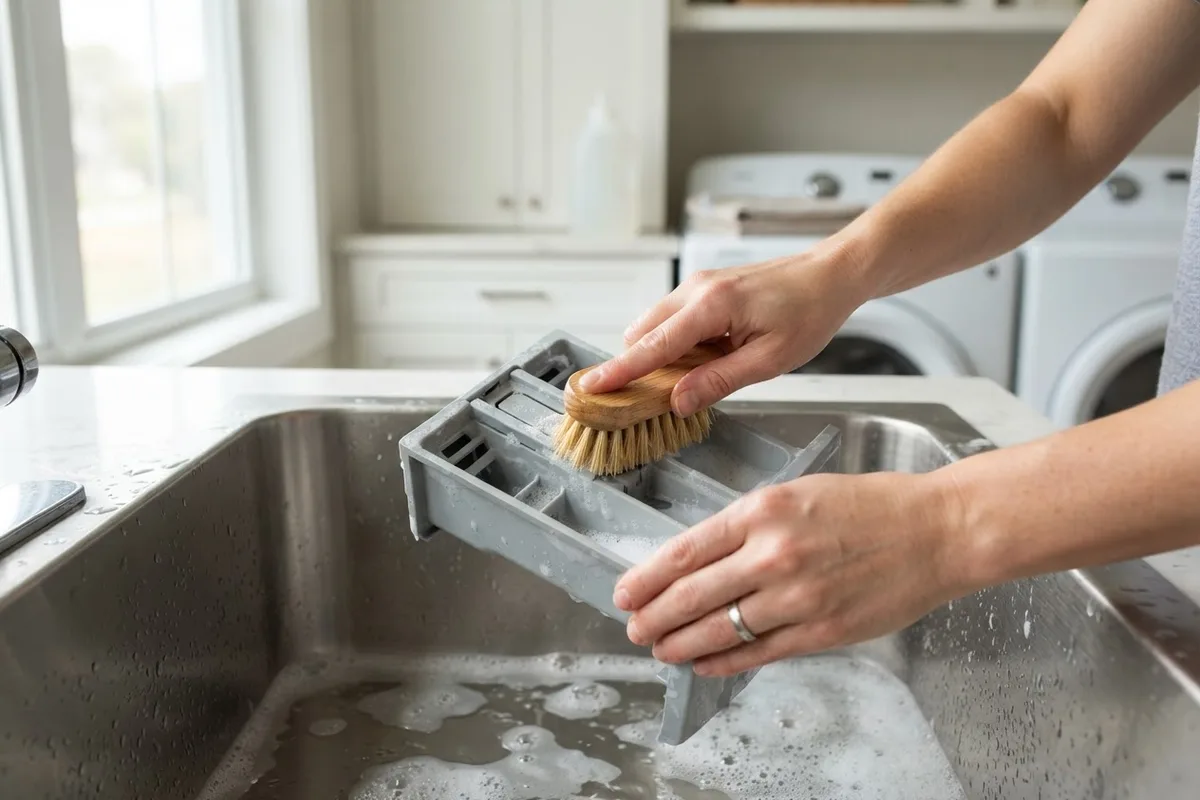
- Slide the detergent drawer out until it stops, then press down on the plastic release tab (usually near the back center) to pull the tray completely out.
- Soak the removable drawer in a sink filled with hot, soapy water for 15 minutes.
- Use a bottle brush or toothbrush to scrub away hardened soap crust inside all the compartments and siphon caps.
- Spray the empty cavity inside the washing machine with white vinegar and wipe the upper spray nozzles clean with a damp cloth.
- Dry the drawer thoroughly and slide it back into place.
3. Clear the Drain Pump Filter Trap
If your washer smells like rotten eggs or stagnant swamp water, decomposing lint and trapped debris in the drain pump filter are likely to blame. A clogged filter can also cause drainage issues—if you notice standing water after a cycle, check out our guide on why your washing machine is not spinning for deeper troubleshooting.
- Unplug the washer and locate the small rectangular access panel on the lower front corner of the cabinet.
- Place a shallow baking sheet or folded bath towels on the floor beneath the panel.
- Pop open the cover, unclip the small rubber drain hose if your model has one, and pull the plug to drain stagnant water into a bowl.
- Slowly unscrew the round pump filter counterclockwise and pull it straight out.
- Remove hair, coins, and smelly sludge from the filter screen, rinse it under hot tap water, and wipe out the housing cavity before screwing the filter tightly back in.
4. Run a Hot Vinegar and Baking Soda Drum Cycle
Even when the stainless steel inner wash basket looks shiny, the outer plastic tub surrounding it accumulates a thick layer of biofilm, body oils, and undissolved detergent. Running a two-part sanitizing cycle strips away this hidden buildup without damaging seals.
- Make sure the washer drum is completely empty of clothes.
- Pour a half-cup of baking soda directly into the wash drum (not the detergent drawer).
- Select the hottest water setting and the longest heavy-duty or tub-clean cycle, then press start.
- Once the baking soda cycle finishes, pour two cups of distilled white vinegar into the detergent dispenser tray.
- Run a second hot wash cycle to flush loosened scale and neutralize lingering odors inside the outer tub and drain lines.
- Wipe down the inside of the glass door and drum with a dry towel when complete.
5. Fix the Drain Standpipe and Hose Depth
Sometimes a sewage or sulfur smell isn't growing inside the washer at all—it is wafting up from your household plumbing. If the corrugated drain hose is pushed too far down into the wall standpipe, foul drain water can siphon backward into the machine.
- Unplug the machine and carefully look behind it at the vertical standpipe where the drain hose inserts.
- Check how far the drain hose extends into the pipe; it should go in no more than 4 to 6 inches.
- Pull the hose up if it is shoved deep into the plumbing trap, and secure it to the standpipe with a plastic zip tie or the factory U-bracket.
- Ensure there is a slight air gap around the hose opening—never tape or seal the hose airtight into the standpipe.
- If the washer sits unused for weeks in a guest room or basement, pour two cups of water directly into the standpipe to refill a dried-out P-trap that may be letting sewer gas into the room.
6. Switch to HE Habits and Air Out the Drum
Once you eliminate the smell, small changes to your laundry routine will stop mold and bacteria from returning. Excess suds are the primary food source for odor-causing buildup, and keeping the machine sealed traps humidity.
- Use only High-Efficiency (HE) detergent, and measure no more than 1 to 2 tablespoons per full load—more soap does not mean cleaner clothes.
- Skip liquid fabric softener, which coats the outer tub in waxy animal fats; use half a cup of white vinegar in the rinse compartment or wool dryer balls instead.
- Remove wet laundry immediately after the final spin ends.
- Leave the washer door or lid propped open a few inches between loads so air circulates and dries out the tub.
- Pull the detergent drawer out slightly after washing so the internal cavity dries completely.
Keeping your washer clean also helps it run more efficiently; for more ways to cut utility bills across your laundry room and kitchen, read our appliance energy saving tips.
Washing Machine Odor Quick-Reference Guide
| What It Smells Like | Most Likely Culprit | Best DIY Fix |
|---|---|---|
| Musty mildew or wet dog | Mold in the rubber door gasket or dispenser | Scrub the boot seal folds and soak the detergent tray |
| Rotten eggs or sewage | Clogged drain pump filter or dry plumbing P-trap | Clean the lower front pump filter and check standpipe depth |
| Sour, waxy, or stale soap | Biofilm buildup on the hidden outer tub | Run back-to-back hot cycles with baking soda and vinegar |
| Burning rubber or hot metal | Worn drive belt, failing motor, or pump obstruction | Unplug the machine immediately and inspect or call a technician |
When to Call a Pro
Most musty and sour washer odors disappear after a thorough deep clean of the gasket, pump filter, and outer tub. However, if you notice a sharp burning rubber or electrical smell, if dirty water continues backing up into the drum after cleaning the filter, or if the outer tub has so much hardened scale that it requires cabinet disassembly, it is time to bring in an experienced technician. Additionally, if your washer is older and pairing bad smells with loud bearings or leaks, check our guide on the 7 signs your washing machine is dying to decide if a service call makes sense.
A professional deep-clean, drain pump replacement, or drain line repair typically ranges from $120 to $300 across the US, though exact pricing varies by area and model. If the job goes beyond a weekend DIY cleanup, True Appliance Repair can connect you with a local washer and dryer repair pro to inspect the internal tub, pump, and drainage system safely.
FAQ
Can I put vinegar and baking soda in the washing machine at the same time?
It is much more effective to use them in separate cycles or stages. Mixing baking soda and vinegar together at the start of a wash causes them to neutralize each other into mostly saltwater before they can break down soap scum. Run a hot cycle with baking soda first to scrub and deodorize, then follow with a vinegar rinse or cycle to dissolve mineral scale.
Why does my top-load washing machine smell like mildew if it doesn't have a rubber door seal?
Top-load washers still have a hidden outer tub that surrounds the perforated spin basket, and soap residue clings to that unseen wall. Dirt and mildew also gather underneath the plastic rim at the very top of the wash basket and inside the center fabric softener agitator cap. Removing the agitator cap to soak it and running a hot vinegar cycle every month clears out top-loader odors.
How often should I clean my washing machine to prevent smells?
Run a hot tub-clean cycle with white vinegar or a washing machine cleaner tablet once every month, or roughly every 30 loads. You should also wipe down the rubber door gasket on a front-loader once a week and drain and rinse the lower pump filter every two to three months.
Will bleach get rid of black mold stains on the rubber washer gasket?
Once black mildew penetrates deep into porous silicone or rubber, the dark staining is often permanent even after the mold spores are dead. Scrubbing with vinegar or a diluted bleach solution (never mixed together) will sanitize the surface and stop the smell, but if the rubber is severely pitted, torn, or still smells foul after cleaning, replacing the door boot seal is the permanent fix.