
Ice cream is the early warning system for your entire freezer. Because of its sugar and fat content, ice cream begins softening when internal temperatures rise above 5°F to 10°F, even while ice cubes and frozen meats appear solidly frozen. If your favorite pint has turned to soft serve, your appliance is losing cooling efficiency and needs prompt attention before you face widespread food spoilage.
Before undertaking any hands-on inspection or cleaning, always unplug your refrigerator or shut off power at the main breaker panel to keep yourself safe. For minor airflow and dust issues, you can often fix the temperature drop yourself in under an hour.
| Freezer Temperature | Food Condition | System Health |
|---|---|---|
| -5°F to 0°F | Ice cream is firm, rock solid | Ideal operating range |
| 5°F to 10°F | Ice cream is soft, scoopable like custard | Airflow restriction or coil dust |
| 12°F to 20°F | Ice begins clumping, frost accumulates | Seal leak, fan failure, or defrost issue |
| Above 20°F | Meats soften, condensation puddles | Urgent fault; stop and check compressor |
Clean Dirty Condenser Coils
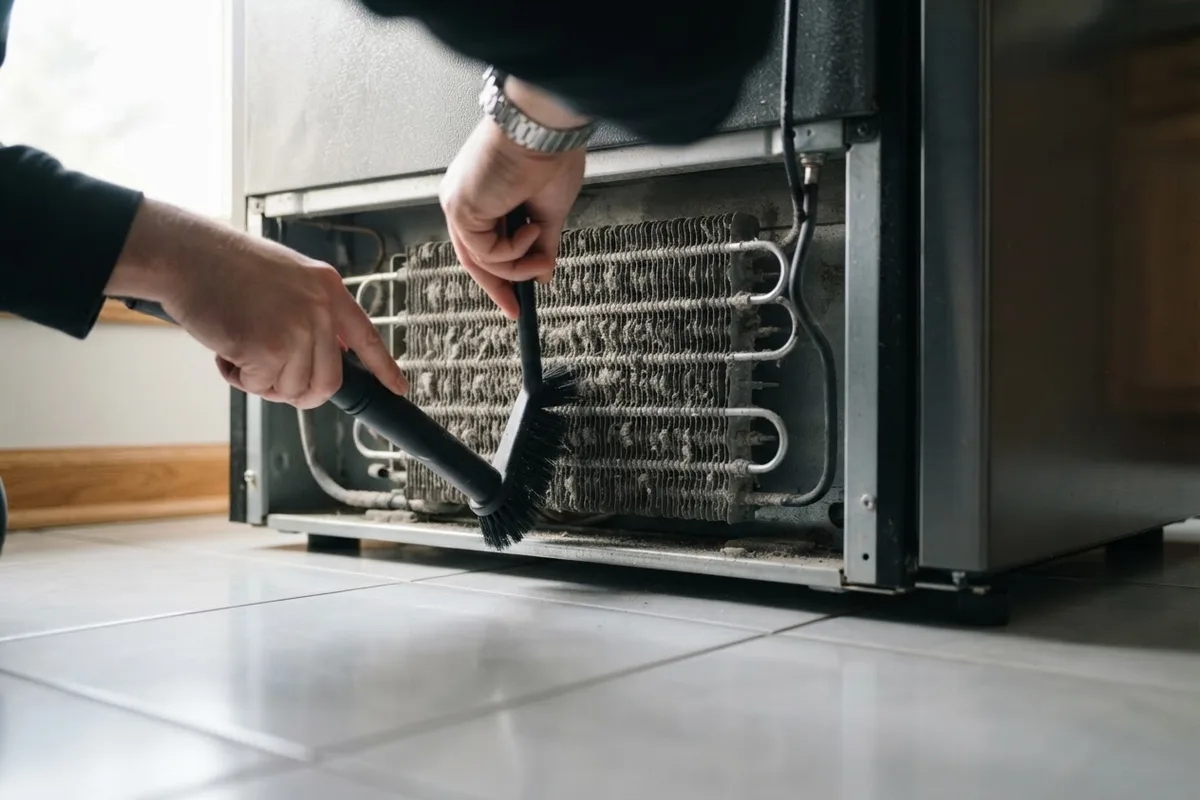
Condenser coils dissipate the heat pulled from inside your freezer compartment. Over months of operation, pet dander, lint, and household dust blanket these metal coils, acting like an insulating thermal blanket that forces the compressor to run hotter and longer without reaching zero degrees.
- Pull the refrigerator away from the wall and disconnect the electrical power plug.
- Locate the coils either underneath the front behind the toe kick plate or mounted along the lower rear panel.
- Remove the protective metal or cardboard access grille using a quarter-inch nut driver or Phillips screwdriver.
- Use a dedicated coil cleaning brush to loosen stubborn lint mats directly between the metal coil fins.
- Vacuum up all loose debris with a narrow crevice attachment, taking care not to bend the delicate aluminum fins.
- Replace the protective cover, push the unit back with at least two inches of rear clearance, and plug it back in.
Test and Clean the Door Gasket Seal
A loose, ripped, or dirty rubber door seal allows warm, moisture-laden kitchen air to sneak into the freezer cavity around the clock. This raises the interior temperature just enough to soften high-sugar foods while creating heavy frost patterns along the shelving.
- Inspect the entire perimeter of the rubber gasket for cracks, mold spots, food residue, or flattened sections.
- Wash the rubber thoroughly with warm water and mild dish soap; avoid abrasive chemicals that degrade flexible vinyl.
- Perform the classic dollar bill test: close the freezer door on a clean dollar bill along various points of the frame.
- Pull the bill straight out gently. If it slides out with zero resistance, your gasket is not sealing firmly.
- Warm stubborn warped sections with a handheld hair dryer set on low heat, gently massaging the rubber outward to reform the seal.
Unblock the Freezer Cold Air Return Vents
Modern upright and French-door refrigerators rely on constant convective airflow passing between the evaporator coils and the freezer storage baskets. Overfilling your freezer or stacking oversized frozen turkeys against the back plastic panel chokes this vital air loop.
- Look along the interior rear and top panels of your freezer compartment to locate the slotted plastic vents.
- Ensure there is at least a three-inch clear air buffer in front of every supply and return vent.
- Reposition bulky frozen boxes and large ice bins away from the interior evaporator fan output grate.
- Check whether your ice cubes have begun sticking together into a single solid block, which frequently indicates interrupted air circulation; see our guide on why refrigerator ice is clumping for specific storage tips.
- Keep the freezer roughly seventy to eighty percent full—empty freezers lose cold air quickly during door openings, while overstuffed units choke internal circulation.
Inspect the Evaporator Fan Motor
The evaporator fan is responsible for circulating cold air over the cooling coils and pushing it through the interior compartment channels. If this motor slows down, accumulates ice on its plastic fan blades, or fails entirely, the compartment will hover around 15°F to 20°F.
- Open the freezer door and listen closely for the quiet, consistent hum of circulating air.
- Press and hold the door light switch manually with your thumb to simulate a closed door; the fan should spin up within a few seconds.
- If you hear a loud clicking or groaning sound, frost may be striking the spinning fan blades behind the rear plastic wall.
- Unplug the refrigerator and remove the interior rear panel screws if you feel comfortable checking the fan blade.
- Spin the fan blade by hand—it should turn freely with minimal resistance. If the shaft feels locked, stiff, or wobbles loosely, the motor assembly needs replacement.
Calibrate and Reset the Temperature Controls
Digital control boards and dial thermostats can accidentally get bumped during grocery loading, or a summer power fluctuation can cause the internal control logic to drift. Ensuring accurate thermostat settings is the simplest fix for soft frozen desserts.
- Place an inexpensive liquid or dial appliance thermometer directly into your freezer between two food packages rather than on the door shelf.
- Check the reading after four hours. The internal freezer temperature should sit precisely between -2°F and 0°F (-18°C).
- If your controls are dials numbered 1 through 7, remember that higher numbers represent colder settings; adjust by one notch toward cold.
- For electronic digital displays, lower the target setting to -1°F or -2°F to compensate for seasonal kitchen heat.
- If the appliance was recently loaded with warm leftovers before a family gathering, review our holiday appliance checklist to balance cooking prep with cooling capacity.
- Allow a full twenty-four hours after any adjustment for the internal cabinet climate to stabilize before checking your ice cream again.
When to Call a Pro
If you have thoroughly vacuumed your condenser coils, verified clear vents, and confirmed an airtight door gasket, yet your thermometer still reads above 10°F, the root cause lies deeper in the refrigeration system. Defrost heater failures, faulty defrost bimetal thermostats, electronic main control board errors, and refrigerant leaks require advanced diagnostic equipment.
Never attempt to tap into sealed refrigerant lines or tamper with the compressor wiring yourself. Sealed-system repairs involve pressurized refrigerants and complex electrical components that demand specialized tools. When basic maintenance does not restore sub-zero temperatures, True Appliance Repair can match you with an independent local appliance pro to diagnose compressor performance or replace failed defrost sensors quickly. Most standard component repairs, such as replacing an evaporator fan or defrost timer, typically range between $150 and $400 depending on your area, appliance brand, and specific model.
Frequently Asked Questions
Why does my freezer keep meat frozen but leaves ice cream soft?
Ice cream contains concentrated sugars, milk fats, and emulsifiers that significantly lower its freezing threshold compared to plain water. Pure water freezes at 32°F, and dense meats freeze solidly around 25°F to 28°F. Ice cream requires temperatures at or below 0°F to remain solid; once your freezer climbs to 8°F or 10°F, ice cream softens while meat remains frozen to the touch.
How long does a freezer take to drop to 0°F after cleaning coils?
After performing maintenance or adjusting your temperature controls, expect the freezer compartment to take between 12 and 24 hours to reach its target temperature. The compressor must run extended cycles to pull heat out of the cabinet walls, shelving, and surrounding food packages before the internal air stabilizes.
Can a clogged water filter make my freezer warm?
A clogged water filter will not directly impact the cooling performance of your freezer compartment, but it will reduce water pressure and lead to tiny, hollow ice cubes. However, if your dispenser system has an active internal leak, water pooling along the back wall can freeze over ventilation channels; learn why your fridge water dispenser is dripping to stop moisture leaks before they freeze your vents shut.
Is it safe to refreeze melted ice cream?
Refreezing ice cream that has melted to a liquid state is not recommended. Aside from developing an unpleasantly grainy, icy texture from large crystal formation, ice cream that sits above 40°F can support bacterial growth. If your ice cream is merely soft to the touch and has stayed below food-safe refrigerator temperatures, it is safe to refreeze, though the original creamy texture may diminish.