
A dishwasher rack that refuses to slide smoothly can turn loading dinner plates into an exercise in frustration. When a heavy dish basket jams halfway along its track, forcing it shut risks chipping fine ceramics, bending metal glide arms, or snapping plastic roller assemblies clean off their brackets. Fortunately, this common kitchen nuisance is almost always caused by simple mechanical interference rather than an expensive motor failure.
Before touching any components inside the cabinet, take an essential safety pause: press Cancel on the control console, let the internal tub cool down completely, and shut off power to the unit at the dedicated kitchen circuit breaker panel or wall plug. If you plan to unfasten rail mounting brackets, turn off the water supply valve beneath the sink as an added precaution.
Here are 5 practical ways to identify why your dishwasher rack is stuck and get it gliding effortlessly into the tub again.
Check for Obstructions in the Tub and Rails
The most frequent reason an upper or lower rack suddenly halts mid-glide is an everyday item sticking out past the basket perimeter. Even a tiny protrusion can wedge against the tub frame, door seal, or internal plumbing lines.
- Scan the rear wall of the tub to see if a cutting board, platter rim, or ladle handle is catching against the water intake tower or spray manifold.
- Spin the middle spray arm by hand through a full 360-degree rotation. If the arm clips a fork prong or bowl base protruding downward through the wire mesh floor, adjust those items immediately.
- Verify that your silverware basket sits fully seated within its designated mounting slots on the lower rack. A tilted caddy frequently snags against the rubber door gasket when the rack moves forward.
- Ensure long knives or serving spoons are laid flat rather than standing upright in the basket cutlery slots.
If you recently adjusted your upper basket to fit tall wine glasses or soup pots and noticed it tilting unevenly, take a moment to consult our troubleshooting walkthrough on why your dishwasher upper rack is slanted to verify that both height adjustment mechanisms sit in matching notches.
Inspect the Rack Roller Wheels for Damage or Jams
Dishwasher racks rely on molded plastic wheels that spin on metal or composite axle pins. Throughout regular family use, wash cycles expose these parts to scalding water, gritty food soil, and heavy mechanical weight. Over time, stray objects frequently get caught in the wheel hubs.
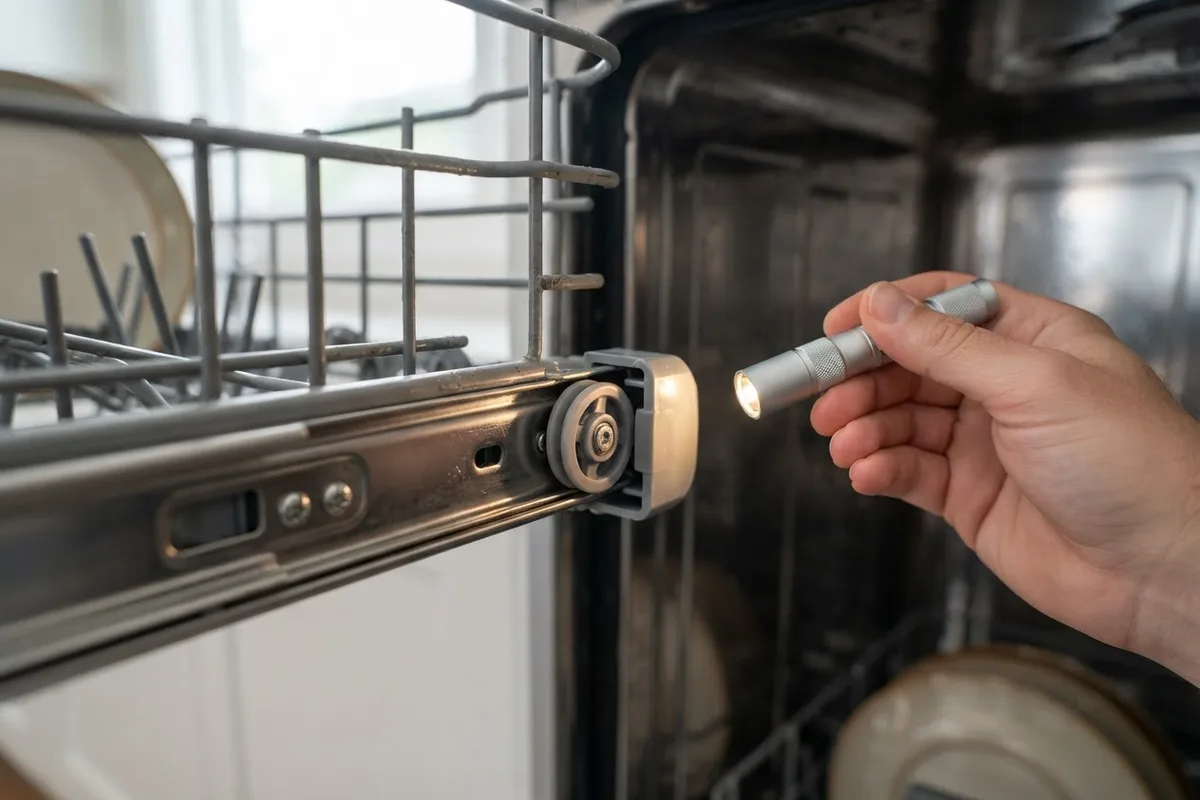
- Pull the rack forward to its stopping point and direct a bright flashlight along the outer edge of the track.
- Rotate each individual wheel with your fingertips. A functioning roller must spin freely on its axle without wobbling, dragging, or sticking.
- Look for foreign debris wound around the axle pin, such as food ties, rubber bands, pet hair, or lemon seeds. Use needle-nose pliers to extract stubborn blockages.
- Check the rolling surface of every plastic wheel for flat spots, cracks, or missing chunks. A wheel that has developed a flat edge will skid along the track rather than roll, causing the entire basket to chatter and bind.
If you find broken or missing wheels, you can purchase standard replacement roller assemblies online or at local hardware supply stores. Most clip directly onto the wire frame without needing specialized hand tools.
Examine the Track End Caps and Rail Stops
Upper dishwasher racks travel along telescopic metal slide rails equipped with plastic end caps at both front and rear edges. These caps serve as mechanical stops to prevent the basket from pulling completely free and spilling dishes onto the floor. When an end cap loosens, cracks, or pivots out of alignment, the rack rollers crash into it.
- Slide the upper rack out halfway so the front ends of both metal slide rails are fully visible.
- Inspect the plastic end tab on each side rail. These clips typically snap over the end of the channel and lock into a small pre-punched metal slot.
- Press on the retaining catch to verify that the cap is firmly locked. If an end cap is hanging loose or twisted inward, the front roller wheel will collide with it instead of passing smoothly.
- Check the rear rail stops deep inside the tub to confirm the rail itself has not slipped forward out of its rear mounting anchor.
- Inspect the plastic for hairline stress cracks caused by thermal fatigue. A cracked stop can flex outward under weight, wedging itself tightly between the rail and the tub wall.
Replacing a cracked or warped end stop requires no tools: simply release the locking tab with your thumb, slide the damaged piece off, and snap the new clip directly into the track channel.
Clean Mineral Buildup and Debris from the Metal Slides
Hard water minerals, undissolved detergent tablets, and bacon grease regularly settle into the hidden channels of metal slide rails. In homes with high mineral concentrations in the municipal water supply, thick white calcium deposits combine with food grease to create a sticky paste that locks up ball bearings and slide tracks.
- Remove the entire rack from the dishwasher by unsnapping the front track stops and pulling the roller wheels clear of the rails.
- Extend both metal rails out toward you as far as they will go.
- Saturate a clean microfiber rag with a solution of warm water and distilled white vinegar, then scrub the interior raceways of the rails to break down chalky limescale.
- Wipe out any black grime or collected grease using an old soft-bristled toothbrush dipped in warm soapy water.
- Dry the slides completely with a clean cloth to prevent spotting.
Never spray standard automotive lubricants, WD-40, or vegetable cooking spray onto dishwasher rails. Petroleum sprays leave toxic chemical residues that rinse onto your plates during the heated wash, and cooking oils quickly turn rancid in hot steam. If you must apply a lubricant to stubborn slide tracks, apply only a couple drops of food-grade silicone lubricant specifically approved for kitchen dishwashers.
Realign Bent Rails and Level the Unit
Loading heavy cast iron Dutch ovens, stone bakeware, or ceramic mixing bowls onto an extended rack places tremendous downward leverage on the metal slide tracks. Over months of heavy use, the tracks can bow outward or twist along their horizontal axis, pinching the roller wheels against the tub walls.
- Pull the empty rack forward along the rails while watching the track alignment from above.
- If the metal rails flare outward toward the tub walls or pinch inward in the center, apply steady, gentle hand pressure to press the metal back into parallel alignment.
- Inspect the mounting screws or clips that hold the slide rail brackets to the stainless steel tub wall. Tighten any loose screws with a Phillips or Torx screwdriver to eliminate frame sag.
- Place a small spirit level across the front edge of the lower dishwasher frame and along the top edge of the tub opening. If your dishwasher has settled unevenly on soft subflooring, the racks will naturally fight gravity and jam.
If the entire appliance shifts, wobbles, or pitches forward when you pull out the bottom basket, take a look at our repair guide on why your dishwasher is loose under the counter to re-secure the mounting brackets before loading more dishes.
| Issue | Probable Cause | Recommended DIY Solution |
|---|---|---|
| Basket stops midway into tub | Utensil, platter, or cutting board hitting spray arm | Rearrange tall kitchenware; manually spin spray arms |
| Wheel drags or skids | Debris tangled on axle or flattened plastic wheel | Clear debris with pliers; snap on replacement wheel |
| Rack binds at front rail edge | Loose, cracked, or rotated track end cap | Resnap plastic stop into track cutout or replace cap |
| Rails feel gritty or stiff | Limescale crust, detergent film, and food grease | Scrub rail grooves with vinegar and warm soapy water |
| Rack pulls to one side | Bent slide rail or sagging tub mounting bracket | Realign rail by hand; tighten bracket mounting screws |
When to Call a Pro
Most stuck dishwasher racks can be resolved in under half an hour by cleaning rails, rearranging tall dishes, or swapping out inexpensive plastic roller clips. These DIY fixes require basic household supplies and minimal mechanical experience.
However, if the metal slide brackets have sheared off the tub wall, if the stainless steel interior liner is warped, or if the door hinges are bent so badly that the lower rack cannot cross the threshold, call in professional help. Tub repairs and structural frame leveling can be tricky, and puncturing a stainless tub liner creates catastrophic hidden water leaks under your kitchen cabinets.
A typical repair call for slide mechanism replacement or cabinet leveling generally runs between $150 and $300, depending on your region and appliance model. When you need dependable assistance, True Appliance Repair can match you with an independent local appliance pro to evaluate the problem and restore your kitchen setup.
Preparing your kitchen for heavy seasonal entertainment? Review our annual appliance maintenance checklist to catch hidden wear and tear across all your home appliances before big gatherings.
FAQ
Why does my dishwasher rack roll forward on its own?
When a dishwasher rack glides out of the tub without being pulled, the entire appliance is tilted forward. Adjust the threaded front leveling legs beneath the base of the machine using an adjustable wrench. Raising the front legs slightly tilts the tub backward by a fraction of an inch, keeping loaded racks firmly in place when the door opens.
Can I use vegetable oil or WD-40 on sticky dishwasher tracks?
No, you should never spray standard WD-40, motor oil, or cooking oil onto dishwasher slides. Petroleum sprays leave foul chemical odors, coat your cookware in grease, and damage rubber door gaskets. Vegetable oils turn gummy and rancid under high cycle heat. Clean the tracks with warm water and vinegar, or use a tiny smear of NSF-rated food-grade silicone.
How do I safely release a stuck upper dishwasher rack?
To remove an upper rack that is stuck, first clear out all dishes to reduce weight. Pull the rack forward until it stops, locate the plastic locking tabs on the front tips of the metal rails, and depress the release clips. Once the end caps are opened or detached, pull the rack straight forward so the wheels roll smoothly off the ends of the rails.
Why does my bottom rack catch on the door when pushed inward?
The bottom dishwasher rack travels across the inner door liner as it enters the tub. If the basket catches on the door lip, verify that the door opens to a completely flat 90-degree angle. Stiff door balance springs, bent hinge arms, or loose hinge screws can keep the door resting slightly elevated, creating an obstacle for the lower roller wheels.