
When a rhythmic thump or sudden loud knock starts coming from your kitchen mid-cycle, it is hard to ignore. A dishwasher making a thumping noise is usually dealing with a blocked spray arm, a shifting dish rack, or a water pressure issue—not a catastrophic motor failure. Follow these six step-by-step checks to track down the sound and quiet your machine before dinner cleanup begins.
Safety First: Before inspecting internal parts, removing lower access panels, or touching any pump housing, always unplug your dishwasher or turn off its dedicated circuit breaker at your electrical panel. Shut off the hot water supply valve under the sink before working near the water inlet valve or supply line.
1. Clear Tall Dishes Blocking the Spray Arms
The most common culprit behind a rhythmic thump-thump-thump is a spinning spray arm smacking against an oversized plate, cutting board, or pot handle. Because the lower and middle spray arms rotate using water pressure, even a single shifted ladle can create a loud knocking sound every two seconds.
- Open the dishwasher door slowly (let any hot steam escape first) and pull out the bottom rack.
- Spin the lower spray arm by hand for a full rotation and watch for clearance issues against cookie sheets, tall plates, or utensil handles poking through the basket.
- Push the bottom rack back in, pull out the upper rack, and spin the middle spray arm underneath it to check for tall glasses or bowls hanging too low.
- Rearrange any oversized items so both arms spin freely with at least an inch of clearance.
- Check that you are not stacking lightweight plastic containers where water jets can flip them into the path of the arm—especially since dropped items near the bottom heating element can also lead to a dishwasher melting plastic.
2. Tighten a Loose or Wobbly Spray Arm Hub
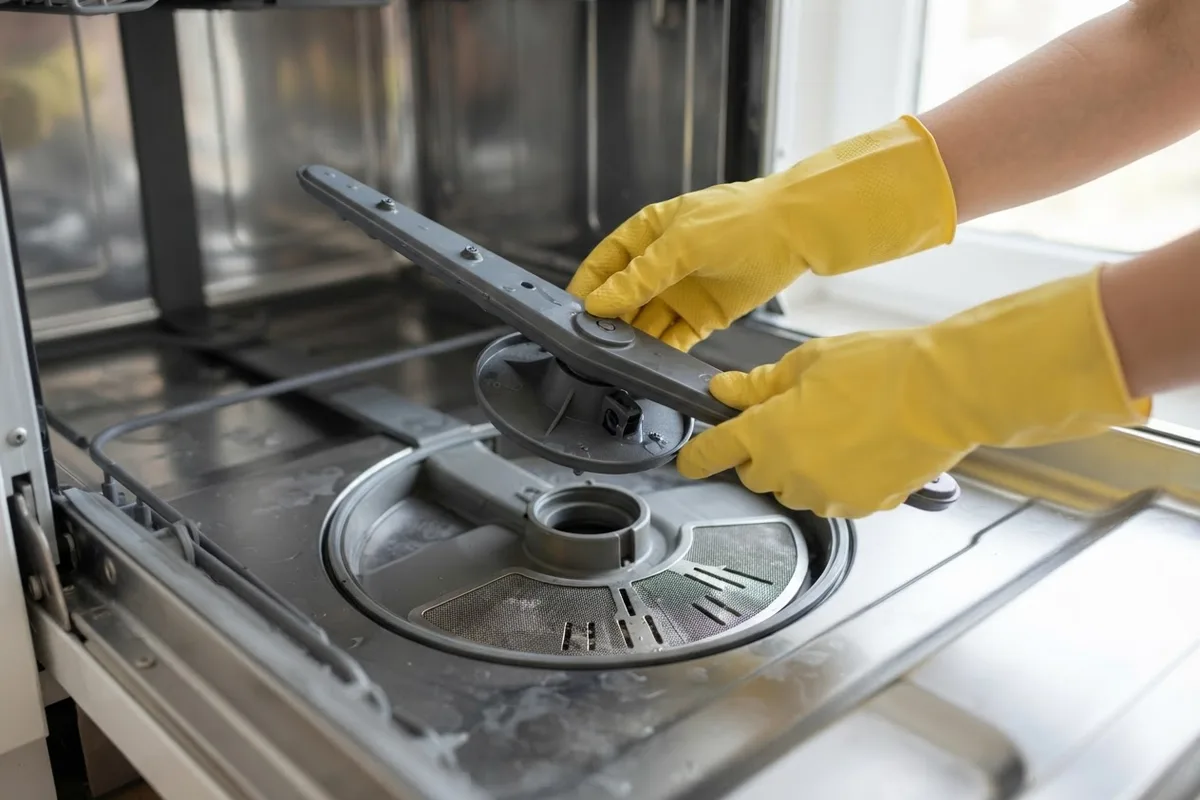
If nothing is blocking the spray arms, the plastic arm itself may have worked loose from its central mounting hub, or its bearing ring may be worn out. When water surges through a wobbly spray arm, the arm pitches up and down and bangs against the bottom of the rack or the tub floor.
- With the power off and the bottom rack removed, grasp the lower spray arm and gently wiggle it up and down.
- A healthy spray arm should have a tiny bit of play so it can spin, but it should not tilt enough to strike the tub or heating element.
- Twist the central locking nut or hub cap clockwise (or counter-clockwise on certain bayonet-style mounts) to make sure it is snug.
- Lift the arm off entirely and inspect the plastic bearing ring or nylon washer underneath for cracks or flat spots.
- If the hub or bearing is cracked, order a model-specific replacement arm (typically $20 to $50 for the part, though prices vary by model) and snap it into place.
3. Secure Loose Dish Racks and Broken Rollers
When water jets blast upward at full pressure, they exert surprising force against the dish racks. If a rack is missing a wheel or an upper-rack track stop is loose, the entire rack can lift slightly and drop back down with a heavy thud each time the spray arm passes underneath.
- Pull out the bottom rack and inspect all four wheel assemblies. Snap any popped-off rollers back onto the wire frame.
- Pull out the upper rack and check the plastic wheels or glides inside the side rails.
- Wiggle the height-adjuster levers on both sides of the upper rack to verify they are locked into matching slots; an uneven rack shifts and thumps during wash surges.
- Inspect the plastic rack stops clipped to the ends of the metal tracks. If a clip is broken or missing, the rack can slide forward and bang against the inner door liner during the cycle.
- Replace any broken rollers or track clips—most snap in by hand in under a minute.
4. Check the Drain Hose Knocking the Cabinet
If you hear a dull thumping noise only at the very beginning of the cycle or right as the dishwasher empties, the corrugated plastic drain hose is likely slapping against the side of the kitchen cabinet or the underside of the sink floor. Whenever the drain pump kicks on, wastewater surges through the loop, causing an unsecured hose to jump and knock.
- Open the cabinet doors beneath your kitchen sink and clear out cleaning bottles so you have a clear view of the plumbing.
- Locate the ribbed drain hose running from the dishwasher side wall up to the air gap or garbage disposal inlet.
- Have a helper start a cycle and hit "Cancel/Drain" while you watch the hose under the sink.
- If the hose flexes and hits the wood cabinet wall, wrap a piece of foam pipe insulation around the contact point.
- Secure the hose high against the underside of the countertop using a plastic mounting strap or heavy-duty zip tie. Keeping this high loop intact also helps prevent sink backflow and keeps your garbage disposal draining properly.
| Thumping Sound Pattern | When It Happens | Most Likely Cause | DIY Difficulty |
|---|---|---|---|
| Rhythmic thump-thump every 1–2 seconds | During main wash & rinse | Spray arm hitting a tall dish or pot handle | Very Easy |
| Hollow plastic knocking | Throughout wash cycle | Loose spray arm hub or missing rack roller | Easy |
| Dull cabinet thud | Start of cycle or during drain | Drain hose slapping inside sink cabinet | Easy |
| Single loud bang in the wall | Right when water stops filling | Water hammer / fast-closing inlet valve | Moderate |
| Heavy rumble and irregular thuds | Continuously while washing | Foreign object in circulation pump impeller | Moderate to Pro |
5. Cushion a Banging Water Inlet Valve (Water Hammer)
A single, loud bang or thump that echoes through the wall right as the dishwasher finishes filling with water is classic "water hammer." Modern dishwasher water inlet valves snap shut instantly when the tub reaches the proper water level. That sudden stop sends a shockwave through your household copper or PEX supply pipes, making them bang against wall studs.
- Turn off the electrical breaker to the dishwasher and shut off the hot water supply valve under the sink.
- Check the hot water supply valve first: make sure it is turned all the way open when in use, as a partially closed valve can chatter and thump when water flows through it.
- Unscrew the two or three screws holding the dishwasher's lower toe-kick panel and remove the panel.
- Locate the water inlet valve (usually at the front left or right corner where the water supply line connects) and verify its metal mounting bracket is screwed tightly to the dishwasher frame.
- To stop the pipes inside the wall from banging, install a screw-on mini water hammer arrestor (typically $15 to $30 at hardware stores) right between the under-sink hot water shutoff valve and the dishwasher supply line.
6. Inspect the Sump for Debris Hitting the Impeller
If the thumping sounds heavy, muffled, and irregular—almost like pebbles tumbling inside a plastic drum—a hard piece of debris may have slipped past the filter screen into the sump housing. Olive pits, fruit seeds, broken glass, or small bones can bounce off the spinning circulation pump impeller.
- Confirm the dishwasher is unplugged or the circuit breaker is off, and bail out any standing water in the bottom of the tub with a cup and towel.
- Twist and lift out the cylindrical bottom filter, then remove the flat mesh screen underneath it.
- Shine a flashlight into the sump basin and put on a pair of thick cut-resistant work gloves (never reach in bare-handed in case of broken glass).
- Feel around the sump well and remove any fruit pits, bone fragments, twist ties, or glass shards.
- If your model has a removable sump cover over the chopper or impeller area, remove the retaining screw, lift the cover, and clear out any trapped debris before reassembling. Note that if the noise shifts from a thump to a high-pitched hum, you may be dealing with a worn motor bearing instead—see our guide on why a dishwasher makes a whining noise.
When to Call a Pro
Most thumping sounds come down to rack alignment, spray arm clearance, or a loose hose under the sink. However, you should stop DIY troubleshooting and call a professional if the thumping is accompanied by a burning smell, water leaking onto the floor, or a circulation motor that groans and stalls. Replacing a circulation pump assembly or dismantling a deeply recessed sump housing typically runs between $180 and $400 including parts and labor, though exact pricing varies by area and model. If your pump impeller is damaged or the motor mounts have failed, True Appliance Repair can connect you with a local pro for dependable dishwasher repair.
FAQ
Is it safe to run my dishwasher if it is making a thumping noise?
If the thumping is just a spray arm tapping a tall plate or pot handle, opening the door and rearranging the dishes makes it completely safe to keep running. However, if the racks are clear and the thumping comes from underneath the tub or inside the pump, stop the cycle immediately so a jammed impeller or loose valve does not cause a leak or motor burnout.
Why does my dishwasher thump several times right when it starts?
At the very start of a cycle, the dishwasher runs a short drain purge before opening the water inlet valve in pulses. A series of thuds during the first two minutes is almost always a loose drain hose slapping the sink cabinet or high house water pressure causing the water supply line to jump when the inlet valve clicks open and shut.
How much does it cost to fix a thumping dishwasher?
DIY fixes like rearranging dishes, strapping down a drain hose, or snapping on a new rack roller cost between $0 and $25. If you need to install a mini water hammer arrestor or a replacement spray arm, expect to spend $15 to $50 on parts. A professional service visit to replace a water inlet valve or circulation pump generally ranges from $150 to $400 depending on your dishwasher brand and local labor rates.