
Loading a heavy basket of wet towels into the drum only to have the dryer door pop right back open stops laundry day in its tracks. Because modern clothes dryers rely on a closed-door safety circuit to run, a door that will not latch means your machine will not start at all. Fortunately, most door issues come down to minor mechanical wear or lint buildup that you can resolve yourself in under thirty minutes with basic household tools.
Before starting any inspection or repair, always unplug your electric dryer from the wall outlet or turn off the circuit breaker. If you own a gas dryer, unplug the power cord and make sure the gas supply valve behind the machine stays untouched and secure.
1. Clear Hardened Lint From the Door Catch
Over months of drying blankets, sweaters, and towels, stray cotton fibers get pushed straight into the small recessed slot on the dryer cabinet where the door pin clicks home. When damp laundry air mixes with this stray fluff, it packs down into a surprisingly dense felt plug that blocks the strike from engaging the spring catch.
- Unplug the dryer from the electrical outlet so the drum light and door switch have zero power.
- Shine a bright flashlight directly into the small rectangular catch hole on the front frame of the dryer.
- Use a wooden toothpick, a plastic zip tie, or a nylon brush to gently scrape and hook out any compacted lint wedged behind the metal or plastic tension fingers. Avoid using sharp metal screwdrivers if your catch is made of plastic, as gouging the housing can ruin the spring grip.
- Vacuum the opening with a crevice attachment to pull out loose dust.
- Wipe the metal door strike pin on the door itself with a damp microfiber cloth so it slides smoothly into the clean slot.
Making this quick check part of your annual appliance maintenance routine keeps the latching mechanism crisp and prevents unnecessary strain on the door hinges.
2. Realign a Bent or Drooping Dryer Door Hinge
People frequently lean on an open dryer door while pulling out heavy wet jeans or resting a full laundry basket on the frame. Over time, that downward leverage bends the hinge leaves or loosens the mounting screws, causing the door to sag just enough that the strike pin misses the catch hole by a fraction of an inch.
- Open the dryer door halfway and lift upward gently on the handle end to feel for play or wobble at the hinge side.
- Watch the strike pin as you slowly swing the door shut. It should enter the dead center of the catch slot without scraping the top or bottom edge.
- If the door droops, support the bottom edge of the door with a stack of books or have a helper hold it level.
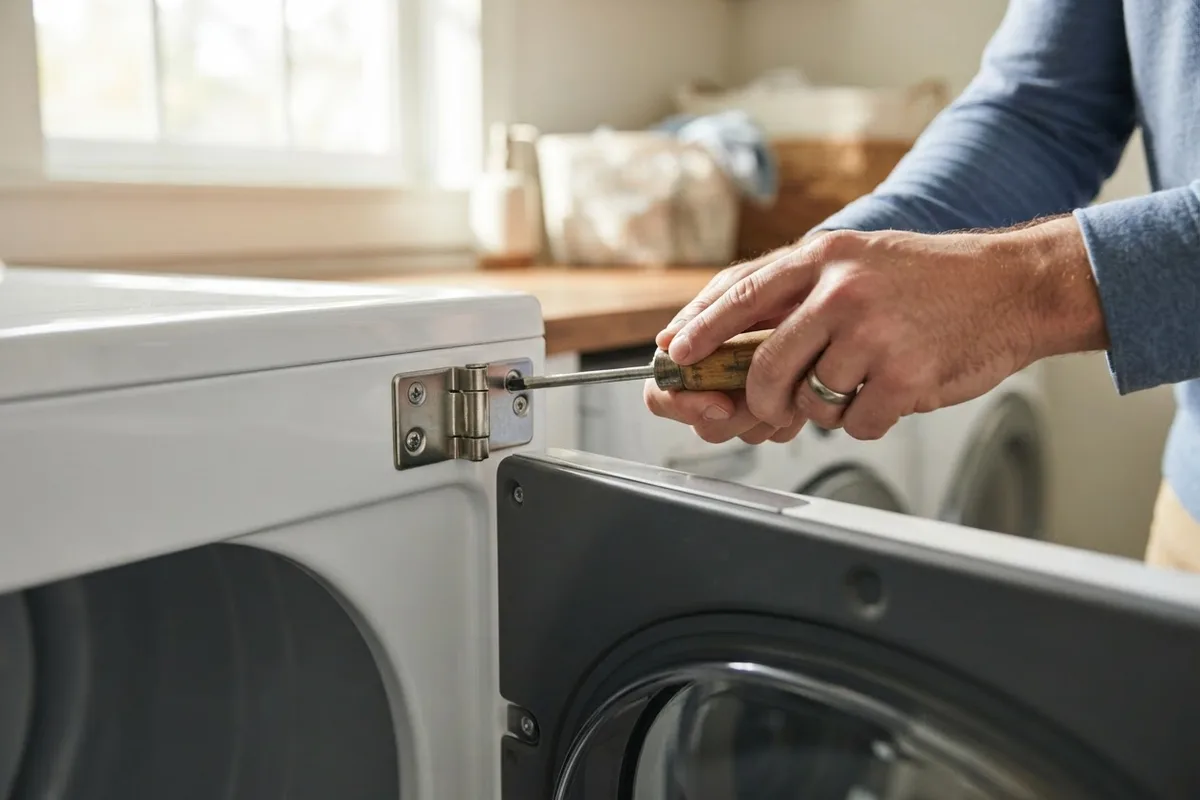
- Use a Phillips screwdriver or a nut driver to tighten every screw securing the hinges to both the door frame and the dryer cabinet.
- If the screws are tight but the metal hinge leaf itself is visibly twisted or bent from heavy weight, remove the door, unscrew the damaged hinge, and install a replacement hinge matched to your model number.
3. Replace a Worn Door Latch and Strike Kit
Every time you pull the dryer door open, metal or nylon tension clips inside the catch flex outward to release the tapered strike pin on the door. After thousands of cycles, those spring clips lose their grip or snap off completely, leaving nothing to hold the door shut against the push of tumbling clothes.
- Inspect the pointed strike pin mounted on the inner edge of the dryer door. If the flared tip is chipped, worn flat, or snapped off, it cannot hook into the catch.
- Grip the old strike with locking pliers and twist or unscrew it from the door panel, depending on whether your model uses a threaded post or a press-fit clip.
- Next, examine the female catch inside the cabinet frame. If the internal metal springs or plastic tabs look spread wide apart or broken, pry the old catch out of the front panel slot using a flat putty knife wrapped in painter's tape to protect the paint.
- Snap the new replacement catch firmly into the rectangular cutout until its locking tabs click against the sheet metal.
- Install the new strike pin on the door and test the swing. You should hear a solid mechanical click when the door closes.
While you are inspecting the front opening for rough or broken plastic parts, check the inner rim as well—damaged trim near the door is also a common culprit if your dryer is snagging clothes during the tumble cycle.
4. Reseat a Twisted or Swollen Door Seal
A heat-resistant rubber or woven felt gasket runs around the perimeter of the dryer door or the cabinet opening to trap warm air inside the drum. If a section of this seal pulls out of its retaining channel, bunches up, or stiffens from spilled liquid fabric softener, it acts like a rubber bumper that pushes the door back open.
- Open the door wide and run your fingers around the entire 360-degree loop of the door gasket.
- Look for any spots where the rubber lip is rolled over, pinched, or hanging loose from its groove.
- Clean sticky detergent or dryer-sheet buildup off the gasket using warm water, a drop of mild dish soap, and a soft cloth, then wipe it dry.
- Starting at the top center of the door, press any loose sections of the gasket firmly back into the channel with your thumbs, working evenly down both sides toward the bottom so you do not stretch the material.
- If the gasket is torn, permanently flattened, or brittle from years of high heat, pull the old seal out of the groove or remove its retaining clips and press a factory-sized replacement seal into place.
5. Fix a Stuck Plunger on the Dryer Door Switch
Near the top or side of the door opening sits a small spring-loaded plastic plunger connected to the electrical door switch. When you close the door, the frame presses this actuator pin inward to tell the dryer it is safe to run. If the plunger binds up at an odd angle or its internal spring jams, the plastic pin can physically block the door from sitting flush against the cabinet.
- Double-check that the dryer power cord is unplugged from the wall receptacle.
- Locate the small pin or lever protruding from the front frame around the drum opening.
- Press the plunger inward with your finger. It should move smoothly with a quiet click and spring right back out when you let go.
- If the pin feels gritty or sticks halfway, wipe around the shaft with a cotton swab lightly dampened with rubbing alcohol to dissolve lint and laundry residue, then press it several times to work it free.
- If the plastic shaft is snapped, crooked, or jammed solid inside its housing, the switch assembly must be replaced. Accessing the switch usually requires removing two top lint-screen screws or releasing the top panel clips, disconnecting the quick-connect wire harness, and unthreading the two mounting screws holding the switch to the front bulkhead.
Quick Troubleshooting Guide: Dryer Door Won't Stay Shut
| Symptom You Notice | Most Likely Cause | Typical DIY Part Cost* | Average Time Needed |
|---|---|---|---|
| Door bounces back without a click | Compacted lint in catch or worn strike kit | $0 – $25 | 10 – 20 minutes |
| Strike pin hits below the catch slot | Loose hinge screws or bent door hinge | $0 – $45 | 15 – 30 minutes |
| Door closes only when pushed hard | Loose, dirty, or bunched door gasket | $20 – $50 | 20 – 30 minutes |
| Hard stop just before the door shuts flush | Jammed or broken door switch plunger | $15 – $40 | 30 – 45 minutes |
| Drum pushes door open mid-cycle | Overloaded drum or worn front drum support | $35 – $90 | 45 – 90 minutes |
Note: Part prices reflect broad typical US ranges and vary by area, brand, and model.
Bonus Check: Stop Overloading the Dryer Drum
Sometimes the door latch and hinges are in decent shape, but the door still pops open five minutes into a cycle. When a dryer drum is stuffed past capacity with heavy comforters or wet bath mats, the tumbling mass slams repeatedly against the inside of the door glass or bulkhead. Even a healthy catch has a weight limit. Keep loads to about two-thirds full so clothes can tumble freely without battering the door open from the inside.
When to Call a Pro
Replacing a plastic strike pin, cleaning out a catch, or tightening loose hinge screws are straightforward projects for almost any homeowner. However, you should stop and bring in an experienced technician if the front cabinet sheet metal itself is cracked around the hinge mounts, if the door switch wiring inside the cabinet shows signs of heat damage, or if the inner drum is sagging and hitting the door due to worn front glides or a loose drum support system. If you also notice loud thumping or suspect your washer or dryer drum is loose, running the machine can quickly ruin clothes and internal components.
Professional dryer door latch, hinge, or switch repairs typically range from $110 to $240 across the US, though final costs vary by area and model. If you would rather skip taking the front panel apart, True Appliance Repair can connect you with an independent local pro for reliable washer and dryer repair.
FAQ
Can I tape my dryer door shut to finish a load?
No, you should never use duct tape, bungee cords, or heavy objects to force a dryer door closed. Taping the door bypasses an important safety feature—the door is designed to pop open if the drum is dangerously overloaded—and tape adhesive leaves a flammable, gummy residue when exposed to high drying heat.
Why does my dryer door click shut but still pop open when it starts spinning?
When a latch clicks on an empty drum but lets go once tumbling begins, the metal tension springs inside the female catch are weakened, or the tip of the strike pin is worn rounded. The catch has just enough tension to hold the weight of the empty door, but not enough grip to resist the push of wet laundry tumbling against the inner door panel.
How much does a replacement dryer door latch kit cost?
A standard replacement door catch and strike kit typically costs between $10 and $25 for most common domestic brands, though heavy-duty or specialty latches vary by model. Most kits include both the male strike pin and the female catch, and it is always smart to replace both halves at the same time so they wear evenly.
Will a loose dryer door prevent the dryer from heating properly?
Yes. Even if the door stays closed just enough to depress the door switch and spin the drum, a gap caused by a worn gasket or weak latch lets hot air escape into the laundry room and pulls cool room air into the drum. That air leak forces the heating system to run much longer and leaves towels damp at the end of the cycle.