
A gas stove burner that keeps clicking continuously is one of the most frustrating kitchen interruptions. Whether the spark igniter clicks constantly while the flame is lit, or keeps ticking long after you turn the control knob off, the noise indicates an electrical circuit that is unable to break. In most cases, the culprit is moisture, accumulated grease, a misaligned burner cap, or a worn spark switch.
While constant clicking sounds alarming, it is often a straightforward issue you can resolve without professional help. Before diving into repairs, safety must come first: always unplug your range from the electrical outlet or shut off the circuit breaker, and turn off the manual gas shut-off valve behind the appliance before inspecting or servicing internal components. If you notice a strong smell of natural gas or suspect a gas line leak, immediately turn off the gas valve, leave your home, and contact your local utility provider.
Here are five common causes for a clicking gas stove and step-by-step troubleshooting methods to fix the problem.
Clean Moisture and Debris Around the Igniter
The most frequent reason a gas stove igniter clicks endlessly is moisture or food residue trapped around the spark electrode. The igniter relies on a clean electrical path to ground against the metal burner head. When grease, sauce spillovers, or cleaning sprays coat the white ceramic igniter tip, electrical current leaks across the surface, tricking the spark module into firing continuously.
To clean the igniter head properly:
- Disconnect the stove from electrical power and verify the gas supply valve is closed.
- Remove the cast-iron cooktop grate, burner cap, and burner ring to expose the small ceramic igniter pin.
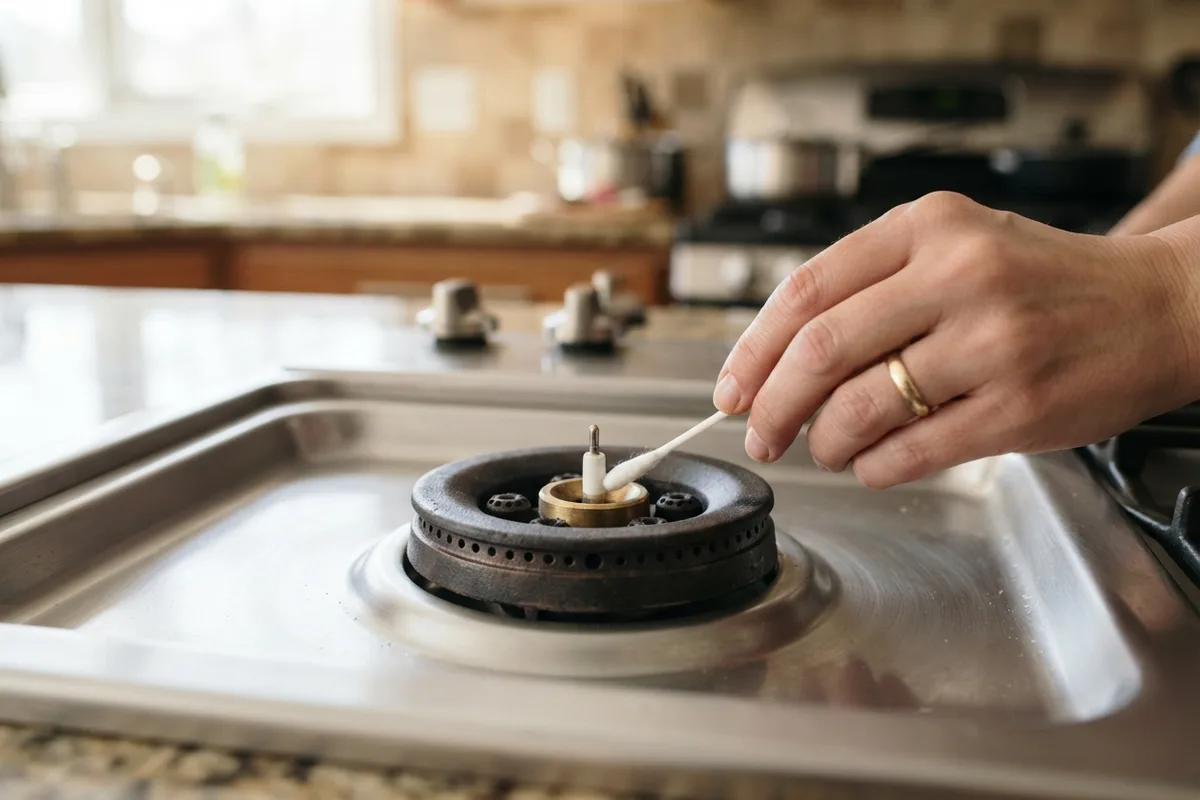
- Dampen a cotton swab or microfiber cloth with rubbing alcohol (avoid dripping wet rags).
- Gently wipe away grease and carbon deposits from the tip and sides of the ceramic igniter pin.
- Use a dry sewing needle or wooden toothpick to clear any food debris out of the small gas notch right next to the igniter.
- Allow the area to air-dry completely for 10 to 15 minutes before reassembling the components and restoring power.
If you recently deep-cleaned your cooktop using spray cleaners, leftover moisture inside the igniter cavity might require up to 24 hours to dry fully before normal operation resumes.
Realign the Burner Cap and Flame Spreader
Gas stove burners require precise alignment to distribute fuel evenly across the igniter tip. If a heavy pan bumps a burner cap out of position, or if you reinstalled the cap slightly crooked after cleaning, gas cannot reach the spark pin uniformly. The spark module will continue clicking because it cannot detect a stable flame grounding signal.
Correcting cap alignment takes less than two minutes:
- Ensure all cooktop knobs are switched to the OFF position and the stove burners are cool to the touch.
- Lift off the cast-iron grate above the clicking burner.
- Lift off the heavy metal burner cap and inspect its underside for debris, rust, or soot.
- Wipe the underside of the cap with a dry towel.
- Carefully place the cap back onto the burner head, ensuring it sits completely flat without wobbling. Many modern cooktops feature alignment notches or pins that must drop into matching slots.
- Rotate the cap slightly with your fingers to confirm it is seated snugly.
Once the cap rests evenly, reconnect power, turn the knob to IGNITE, and check if the flame catches immediately and the clicking stops once the flame lights.
Dry Out Spilled Liquid Inside the Burner Head
A pot of water or soup boiling over is a major trigger for burner clicking. Liquid drains down into the burner base and soaks into the spark switch harness or the hollow igniter well beneath the cooktop surface. Even a tiny droplet of water bridging two electrical contacts inside the burner assembly creates a closed circuit that powers the spark module continuously.
To dry out a flooded burner head:
- Shut off electrical power to the range immediately to prevent shorting the electronic spark module.
- Remove the grate, burner cap, and metal burner body.
- Soak up standing liquid inside the burner base using paper towels or a dry microfiber cloth.
- Aim a hand-held hair dryer set on low heat at the igniter base and burner well for 3 to 5 minutes to accelerate evaporation.
- Leave the burner disassembled for several hours (or overnight) to allow ambient air to dry hidden moisture inside the wiring harness.
Avoid using the oven or adjacent burners while drying out a soaked cooktop, as heat can pull trapped moisture deeper into the internal switch housing.
Check for Damaged Control Knobs or Spark Switches
Behind every control knob on your gas range sits a small plastic spark switch mounted to the gas valve stem. When you push and turn a knob to the LITE position, this switch closes a circuit to send power to the spark module. Over time, liquid spills can trickle behind the control knobs, causing the internal switch contacts to stick together in the ON position.
To test and clean your spark switches:
- Ensure the range is unplugged from the wall outlet.
- Pull the control knobs straight off their control shafts.
- Inspect the shaft wells for accumulated grease, dirt, or liquid residue.
- Clean around the shaft opening using a cotton swab dipped in rubbing alcohol.
- Press down gently on each valve shaft to see if it spring-backs freely. If a shaft feels sticky or frozen, liquid has likely oxidized the switch mechanism inside.
- Wiggle the shaft gently to see if sticking releases.
If cleaning behind the knobs does not resolve the constant spark, the individual ignition switch may have suffered a permanent electrical short and require replacement. If you notice other heating or electronic issues across your appliances, reviewing a seasonal appliance maintenance checklist can help keep your kitchen systems working reliably year-round.
Inspect and Replace a Faulty Igniter Wire
If your stove continues clicking from a single burner even when all knobs are turned off and the stove is completely dry, the wiring harness between the spark module and the igniter pin may be damaged. Continuous friction, heat exposure, or pest activity beneath the cooktop maintop can strip insulation off an igniter wire. When bare wire contacts grounded cabinet metal, it shorts the circuit and triggers non-stop clicking.
To inspect internal wiring safely:
- Unplug the range power cord and turn off the gas shut-off valve completely.
- Lift or remove the maintop panel according to your manufacturer's instructions (some cooktops lift on hinges, while others require removing burner screws).
- Trace the thin wire running from the spark electrode down to the central spark module.
- Look for visible burn marks, cracked insulation, frayed copper strands, or loose terminal connections.
- If insulation is worn through, the entire igniter wire assembly must be replaced.
If inspecting internal wiring reveals charred components or a damaged electronic spark module, stop DIY troubleshooting and consult a qualified technician.
| Symptom | Likely Cause | Primary DIY Action | Difficulty Level |
|---|---|---|---|
| Clicking after recent spill | Moisture in burner head or switch | Blow-dry burner well & let dry 24 hours | Easy |
| Burner lights but keeps clicking | Dirty ceramic igniter or bad cap seating | Clean igniter pin & realign burner cap | Easy |
| Continuous clicking when knobs are OFF | Shorted spark switch behind knob | Clean valve shafts; replace switch harness | Moderate |
| Clicking on ALL burners simultaneously | Shorted spark module or main harness | Unplug unit; inspect main wiring | Moderate/Advanced |
| Gas smell present without flame | Open gas valve or unlit burner port | Shut off gas valve immediately; ventilate room | Professional |
When to Call a Pro for Gas Stove Repairs
While most gas stove clicking problems stem from minor moisture buildup or food spills, complex electrical shorts and gas delivery issues require expert attention. If you have thoroughly dried the cooktop, cleaned the igniter tips, and verified burner cap alignment, but your stove continues to spark nonstop, the internal spark module or valve harness likely needs technical replacement.
Never attempt to service gas valves, burner supply tubes, or internal gas manifolds yourself. Gas components require strict torque specifications and leak-testing procedures to prevent hazardous fuel leaks. If your appliance is showing broader signs of aging alongside igniter issues, reading about 7 signs your oven is dying can help you decide whether repair or replacement makes the most sense.
When DIY troubleshooting does not resolve the issue, True Appliance Repair can match you with a local appliance pro to diagnose and repair your cooktop safely. Professional technicians can safely replace faulty spark modules, test valve continuity, and verify that your appliance operates within peak safety standards.
FAQ
Why does my gas stove click even when it is turned off?
Continuous clicking when all control knobs are set to OFF usually means liquid or grease has seeped behind a control knob into the ignition switch harness. This bridges the electrical contacts and sends continuous power to the spark module. Unplugging the stove and allowing the switch housing to dry completely over 24 hours often resolves the problem.
Is a clicking gas stove dangerous to leave plugged in?
While a clicking igniter is primarily an annoying electrical glitch rather than an immediate emergency, leaving it sparking continuously can burn out the electronic spark module or overheat internal wiring. If you cannot stop the clicking immediately, unplug the range from the electrical outlet or trip the circuit breaker to cut power until you can address the root cause.
Can I still use my gas stove if one burner keeps clicking?
If the clicking is caused by trapped moisture and you can successfully light the burner with a normal flame, you can use the stove temporarily. However, if the igniter continues clicking rapidly while the flame is burning, or if you smell gas without ignition, turn the burner off immediately and resolve the underlying issue before cooking further.
How much does it cost to fix a gas stove igniter or spark switch?
If basic DIY cleaning does not solve the problem, typical professional repair costs for replacing a gas stove spark switch or igniter range between $150 and $300 nationwide, depending on your cooktop model and labor rates in your local area. DIY replacement parts like igniter pins or switch harnesses generally cost between $20 and $70. If your cooktop is also failing to heat properly in the oven cavity, check our guide on why your oven is not heating up for further diagnostic tips.