
Nothing ruins a week of fresh groceries faster than pulling translucent, frozen lettuce and icy cucumbers out of your bottom produce bins. When you find your refrigerator crisper drawer freezing food while the upper shelves feel normal, cold air is either pooling at the bottom of the cabinet or leaking directly around the bins. Fortunately, you can fix frozen crisper drawers yourself in under 20 minutes with a few simple airflow and setting adjustments.
Safety First: If you need to inspect wiring on an electronic damper, unclip a rear interior air tower, or replace a temperature sensor, always unplug the refrigerator from the wall outlet first. If you have to roll the fridge away from the wall to reach the plug, shut off the ice maker water supply valve first so you do not kink or tear the water line.
1. Adjust the Crisper Humidity Sliders
Most crisper drawers have small sliding vents along the top rim that control how much cabinet air enters the bin. When these vents are wide open, dry, sub-freezing air from the cooling vents blows straight across tender leafy greens and freezes the water inside their cells.
- Locate the humidity control slider on the front lip of each produce drawer.
- Slide the control to the High Humidity (closed window) setting for the drawer holding leafy greens, herbs, cucumbers, and peppers, which seals the bin against cold drafts.
- Set the second drawer to Low Humidity (open window) for fruits like apples, pears, and avocados, which have thicker skins and need a tiny vent to release ripening gas.
- Store extra-delicate greens in a breathable produce bag or wrap them in a dry paper towel to buffer them against sudden blasts of cold air.
2. Clear Blocked Upper Return Air Vents
Cold air naturally sinks to the floor of the fresh food cabinet—right where the crisper bins sit. If tall milk jugs, leftover containers, or foil holiday trays block the upper return ducts, the cold air cannot cycle back past the main thermostat. The refrigerator keeps pumping freezing air into the cabinet, and all that excess chill settles directly into the bottom drawers.
- Open the refrigerator and find the cold air supply louvres at the top and the return air vents along the middle or lower side walls.
- Move groceries so there is at least two inches of open space in front of every vent and along the back wall.
- Remove any plastic mats, wax paper, or foil liners from the shelves, as they trap heavy cold air around the lower bins.
- Keep the upper and middle shelves roughly two-thirds full of food or water pitchers; that thermal mass absorbs cold evenly so it does not all sink to the bottom.
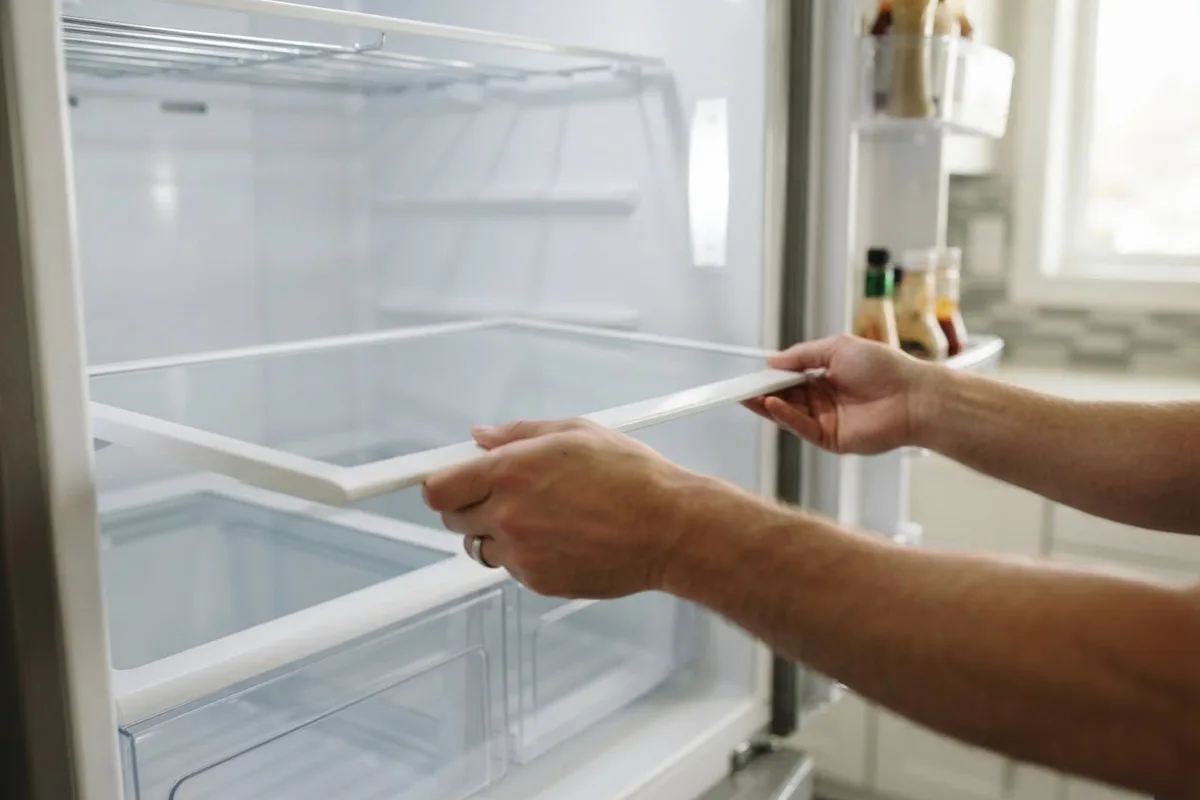
3. Reseat the Glass Crisper Shelf and Bin Tracks
The heavy glass panel directly above your crisper drawers isn't just a shelf—it acts as an insulated roof that shields your produce from the much colder cabinet air above. If the glass is shifted forward by even a quarter inch, or a drawer track is sitting crooked, cold air pours straight down into the bin.
- Pull both crisper drawers completely out of the refrigerator and set them on the counter.
- Lift the glass shelf frame and wipe away any dried spills or food crumbs along the plastic support ledges on the cabinet walls.
- Set the glass shelf back down firmly so it sits completely flat and flush against the rear plastic moulding.
- Inspect the rubber or plastic trim sealing the front and back edges of the glass panel, snapping it back into place if it has worked loose.
- Slide the drawers back onto their glides and push them all the way shut.
4. Check the Deli Meat Pan Temperature Control
Many French-door and side-by-side refrigerators include a wide pantry drawer or a small meat pan right next to or underneath the crispers. These compartments often have their own separate chill slide or digital button that channels 29°F air straight from the freezer to keep meat firm. When set to its coldest notch, that icy air bleeds right through the thin plastic divider into your vegetable drawers.
- Look for a separate slider labeled Meat / Coldest and Vegetables / Warmer on the side wall or along the full-width pantry drawer.
- Slide the lever toward the warmer vegetable setting, or switch the digital pantry selector from "Meat/Freeze" to "Produce" or "Deli."
- Wait 12 hours and feel the side wall of the crisper bin; it should feel cool rather than icy.
- If your freezer side is overworking because of heavy frost buildup, that extra cold can also spill through the divider wall—follow our steps on how to defrost a freezer fast if you spot thick ice behind the freezer bins.
5. Verify the Actual Cabinet Temperature
The digital readout on your refrigerator door shows the target temperature, not necessarily the real temperature down near the bottom glass shelf. A bump of the control dial or a drifting sensor can easily drop the lower cabinet below 32°F, which can also freeze up nearby water lines and explain why your refrigerator ice maker is not working.
- Place a freestanding appliance thermometer inside a small glass of water and set it on the shelf directly above the crisper drawers.
- Leave the refrigerator closed overnight for at least eight hours.
- Check the thermometer in the morning; the ideal temperature for a refrigerator is between 37°F and 40°F.
- If the thermometer reads 35°F or lower, raise the main refrigerator temperature control by two degrees and retest the next day.
6. Inspect the Air Damper and Door Seals
In most refrigerators, a small motorized door called the air damper opens and closes to meter how much sub-zero freezer air enters the fresh food side. If the plastic damper door breaks or sticks open, freezing air floods the cabinet nonstop. Similarly, a worn lower door gasket lets humid kitchen air seep in right at drawer level, causing the system to overcool in response.
- Listen near the top back corner of the refrigerator when you adjust the temperature setting up and down; you should hear a faint whirring click as the damper door moves.
- Hold your hand in front of the top air vent when the compressor is stopped—if freezing air still blasts out continuously, the damper may be stuck open.
- Inspect the rubber door gasket around the bottom half of the refrigerator door for tears, gaps, or sticky residue.
- Wash the lower door gasket with warm soapy water and dry it thoroughly so it forms an airtight seal along the bottom threshold.
Quick Reference: Why Your Crisper Drawer Freezes Food
| Common Cause | What You Will Notice | DIY Fix Time | Typical Part/Pro Cost (Varies by Area/Model) |
|---|---|---|---|
| Humidity vent wide open | Top layer of greens freezes first | 1 min | $0 (slide vent closed) |
| Blocked upper air vents | Top shelf feels warm while drawers freeze | 5 mins | $0 (rearrange tall items) |
| Misaligned crisper glass | Gap between glass frame and back wall | 5 mins | $0 (reseat shelf) |
| Meat chiller set too cold | Drawer wall next to deli pan has frost | 1 min | $0 (adjust deli slider) |
| Stuck air damper | Freezing air blows nonstop from vents | 15 mins to check | $120–$260 for damper replacement |
| Faulty cabinet thermistor | Fridge ignores temperature setting changes | 10 mins to test | $130–$250 for sensor repair |
When to Call a Pro
If you have closed the humidity sliders, cleared the upper vents, leveled the glass shelf, and raised the thermostat to 38°F, yet your produce still turns to ice overnight, a temperature control component has likely failed. Stop and call a professional if the motorized air damper is stuck wide open, if the cabinet thermistor is sending false readings, or if the main electronic control board refuses to cycle the cooling fan off.
When you need a faulty damper or sensor replaced without the guesswork, True Appliance Repair can connect you with a local technician for professional refrigerator repair. If your fridge is well over 10 years old and showing several temperature issues at once, check our appliance lifespan repair-or-replace guide to decide whether a repair makes financial sense.
FAQ
Why is only one of my two crisper drawers freezing food?
In side-by-side refrigerators, the crisper drawer on the left sits directly against the insulated freezer wall and often next to the cold return air vent. Keep hardy root vegetables, apples, or bottled drinks in the freezer-side bin, and store delicate lettuce, berries, and herbs in the right-hand bin away from the divider wall.
Should I keep the crisper drawer full or empty to stop freezing?
A crisper drawer that is about half to two-thirds full holds a steadier temperature than a nearly empty bin containing just one bag of salad. When the drawer has several items inside, the produce shares the thermal load so a single item does not absorb the full brunt of a cold cycle.
Can a dirty condenser coil cause the crisper drawers to freeze?
Indirectly, yes. When dusty condenser coils cause the refrigerator to run much longer cycles to shed heat, the evaporator fan stays on longer and pushes extra cold air to the bottom of the cabinet. Vacuuming the coils underneath the fridge twice a year helps keep cooling cycles short and even.
Does wrapping vegetables in paper towels stop them from freezing?
Wrapping damp greens in a dry paper towel inside a produce bag absorbs surface moisture and creates a thin insulating air pocket. While it will not fix a broken air damper, it does stop ice crystals from forming on wet leaves when the drawer temperature dips near 33°F.