
A refrigerator door that refuses to stay shut, pops back open, or leaves a visible gap is more than a minor annoyance. When ambient room air leaks past the door seal, warm moisture enters the cabinet, causing frost accumulation, temperature spikes, higher energy bills, and premature food spoilage. Fortunately, you rarely need to buy a brand-new appliance to fix a popping or sagging door. In most cases, a few adjustments using simple tools around the house will restore an airtight seal.
Before performing any hands-on inspection or repair on your appliance, always unplug the unit from the electrical wall outlet or turn off the circuit breaker to ensure your safety.
Check for Overstocked Shelves or Misaligned Drawers
One of the most frequent reasons a refrigerator door fails to shut completely is physical obstruction inside the cabinet. Heavy gallon jugs stored in door bins can cause the door frame to sag, while tall items or misaligned crisper drawers can press against the interior door liner when closed.
- Clear the door shelves. Remove heavy liquids, condiments, and large jars from the door storage bins.
- Inspect internal bins and drawers. Push every vegetable crisper, meat drawer, and slide-out shelf all the way back into its tracking tracks. A drawer left open by even half an inch will strike the inner door panel and prevent a tight magnetic seal.
- Re-balance internal weight. Redistribute heavy items onto stable main interior shelves rather than door racks to prevent structural door droop.
If removing obstructions allows the door to pull flush against the cabinet frame, your issue is solved. If the door still resists closing, move to inspecting the flexible rubber gasket.
Clean Dirt and Sticky Residue from the Door Gasket
Over time, spilled juices, food crumbs, and grease accumulate inside the accordion folds of the magnetic rubber door gasket. Sticky residue acts like a soft wedge, preventing the magnetic strip inside the gasket from gripping the metal cabinet frame tightly.
- Unplug the appliance. Disconnect electrical power before spending extended time with the door open.
- Mix a mild cleaning solution. Combine warm water with a few drops of liquid dish soap or equal parts warm water and white distilled vinegar. Avoid harsh abrasive cleaners or bleach, which dry out flexible vinyl and cause cracking.
- Scrub the gasket folds. Use a microfiber cloth or soft toothbrush to clean thoroughly inside all rubber bellows and along the metal face of the refrigerator cabinet where the gasket lands.
- Wipe dry and condition. Dry the gasket completely with a clean towel. Apply a thin film of petroleum jelly along the hinge side of the gasket to keep the rubber supple and reduce friction as the door swings shut.
Cleaning the seal regularly is a core home maintenance habit that prevents costly cooling problems. If you want to keep all your kitchen units running efficiently, review our guide on home appliance tune-up steps to prevent breakdowns.
Realign or Lubricate Damaged Door Hinges
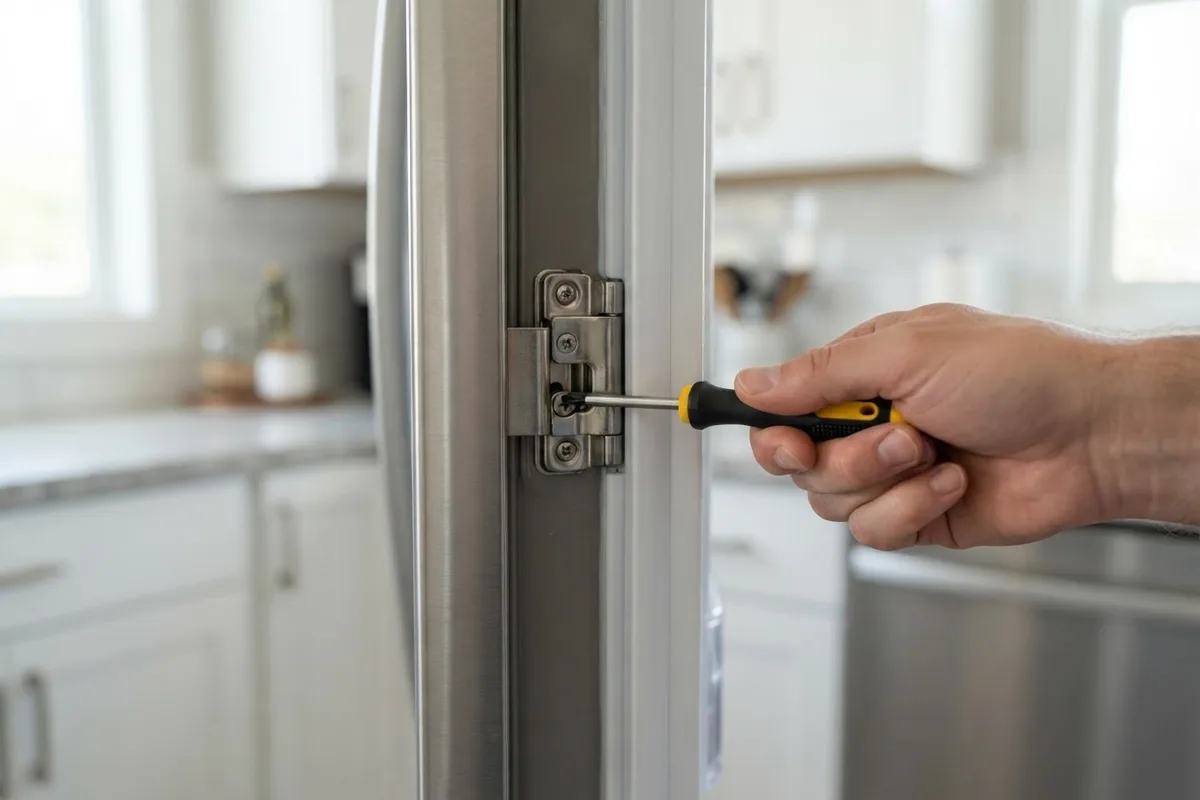
If your refrigerator door sags at an angle, drags along the top of the freezer door, or makes a scraping noise, misaligned or worn hinges are the primary suspect. Over years of daily use, top and bottom hinge screws can loosen, causing the door to sit crooked.
- Disconnect electrical power. Unplug the power cord or shut off the breaker before servicing door hardware.
- Inspect hinge covers. Pop off the plastic hinge caps on top of the unit using a flathead screwdriver or putty knife.
- Check screw tightness. Use a socket wrench or screwdriver to verify that upper, center, and lower hinge bracket mounting bolts are snug.
- Adjust door alignment. Lift the door slightly from the bottom while tightening loose bolts to restore a perfectly level horizontal and vertical alignment.
- Lubricate pivot pins. Apply a small drop of food-safe silicone lubricant or grease to the hinge pins if you notice squeaking or binding during operation.
Proper hinge alignment ensures the entire perimeter of the door gasket contacts the cabinet simultaneously.
Level the Refrigerator to Enlist Gravity
Modern refrigerators are designed to tilt slightly backward so that gravity naturally pulls the heavy doors shut when released. If your home has settled or the adjustable leveling legs under the front base grille were improperly adjusted, the appliance might tilt forward, causing the doors to swing open on their own.
- Remove the front base grille. Snap off the plastic kickplate at the bottom front of the appliance.
- Examine the leveling legs. Locate the threaded leveling legs or adjustable roller assemblies behind the grille on both left and right sides.
- Adjust front height. Use a flathead screwdriver or adjustable wrench to turn the leveling legs clockwise. This raises the front of the cabinet.
- Verify the tilt. Place a bubble level on top of the refrigerator cabinet. The front of the refrigerator should sit approximately 1/4 inch to 1/2 inch higher than the back (a slight backward tilt of 0.5 to 1 degree).
- Test auto-close action. Open the door roughly 45 degrees and let go. A properly leveled appliance will allow the door to swing closed and latch under its own weight.
If your refrigerator has been running constantly due to seal air leaks, fixing the tilt often resolves cooling cycling issues. Learn more about cooling efficiency in our detailed guide on why your refrigerator is running constantly.
Restore or Replace a Weak Refrigerator Door Seal
If the gasket is clean and aligned but air still leaks through, the magnetic strip inside may have weakened or the vinyl bellows may have lost their shape. You can test seal strength using the dollar bill test.
- Perform the paper test. Insert a dollar bill or strip of paper halfway between the gasket and cabinet frame, then close the door.
- Check resistance. Pull the paper out slowly. You should feel firm resistance. If the paper slides out effortlessly, the magnetic force or rubber seal in that area has failed.
- Warm warped rubber. For minor gaps, use a hairdryer on low heat held 6 inches away to gently warm and soften warped vinyl folds. Gently stretch the rubber outward with your fingers while warm to restore its shape, then close the door until it cools.
- Replace a damaged gasket. If the rubber is torn, cracked, or permanently warped, buy an exact replacement gasket. Unplug the refrigerator, peel the old gasket out of its retaining channel (or remove the perimeter screws securing it under the inner door liner), push the new gasket firmly into the track, and verify a tight seal all around.
When a poor door seal causes warm air intrusion, it can lead to internal temperature fluctuations that threaten perishable food or trigger unexpected cooling issues. If your cabinet remains too warm even after restoring the seal, check our troubleshooting steps for why your refrigerator is not cooling.
Quick Diagnostic Comparison: Door Seal Problems
Here is a quick reference table to help you identify the root cause of your door sealing issue and choose the right repair path:
| Symptom | Primary Cause | Recommended DIY Solution | Estimated DIY Repair Cost |
|---|---|---|---|
| Door pops open when closed | Trapped air or forward cabinet tilt | Adjust front leveling legs to tilt unit back 1/4 inch | $0 |
| Visible light or gap near top hinge | Loose upper hinge bolts or sagging door | Align door frame and tighten hinge bracket screws | $0 - $15 |
| Door feels sticky / resists latching | Food buildup on gasket or metal frame | Clean gasket with warm soapy water and soft brush | $0 - $5 |
| Gasket is stiff, cracked, or torn | Aged vinyl rubber or demagnetized strip | Replace gasket assembly with exact model part | $45 - $110 |
| Door bounces back off cabinet frame | Damaged door cam / stop mechanism | Replace lower hinge door closure cam | $15 - $35 |
When to Call a Pro
While most refrigerator door issues stem from simple maintenance or adjustment needs, certain structural or component problems require specialized hands. If the metal door shell is twisted, the internal cabinet frame is bent, or the lower hinge mounting plate has rusted through, standard DIY fixes may not yield an airtight fit.
Additionally, if your door seal was leaking for weeks, ambient moisture may have caused heavy frost buildup on evaporator coils, damaged defrost components, or overworked the sealed cooling system. If you notice persistent warm internal temperatures, loud buzzing noises, or continuous running after fixing the door seal, an expert assessment is necessary. Always leave sealed refrigerant lines, internal wiring harnesses, and electrical panel work to qualified service professionals.
If you are unsure how to align heavy French doors or replace damaged structural brackets, True Appliance Repair can match you with a local appliance pro to diagnose and fix the issue safely. Typical professional repair costs for door hardware, hinge replacements, or gasket installation range from $120 to $280, depending on your region and refrigerator brand. When home troubleshooting reaches its limit, True Appliance Repair connects you with local technicians who can get your appliance back in peak condition fast.
FAQ
How do I know if my refrigerator door gasket needs to be replaced?
Perform the dollar bill test: close the door on a piece of paper or dollar bill and try to pull it out. If it slides out with no resistance, the magnetic seal is weak. You should also replace the gasket if you see visible cracks, tears, brittle rubber, or persistent moisture beaded along the outer frame.
Can a warm room cause a refrigerator door to stick or open?
Extreme humidity and ambient room heat can cause rubber gaskets to become soft or sticky. Humidity also increases condensation inside the gasket folds. Cleaning the seal regularly and maintaining a balanced home temperature prevents moisture buildup around the door perimeter.
Why does my refrigerator door pop open when I close the freezer door?
When you close one door quickly, air inside the unit is compressed and forced through the air ducts connecting the freezer and refrigerator sections. This air pressure spike can push the opposite door open briefly. Adjusting the front leveling legs to tilt the cabinet backward usually prevents doors from staying open after an air pulse.
How much does it cost to fix a refrigerator door that won't close?
Cleaning or leveling the appliance costs nothing in parts. Replacing a door gasket yourself typically costs between $45 and $110 for the replacement part. If you hire a professional service to replace hinges, cams, or door gaskets, total costs generally range from $120 to $280, depending on area labor rates and model complexity.