
Hearing a sudden knocking, thumping, or clunking sound coming from the back of your kitchen can make any homeowner worry about a major breakdown. Fortunately, a refrigerator making a knocking noise is usually dealing with a minor mechanical vibration, an iced-up fan blade, or a loose water line rather than a failing motor. Work through these six practical DIY steps to pinpoint the source of the racket and get your kitchen quiet again.
Safety First: Always unplug your refrigerator from the wall outlet and turn off the ice maker water supply valve before removing access panels, reaching near fan blades, or adjusting rear plumbing lines. Never attempt to open or service the sealed refrigerant system.
1. Clear Ice Around the Evaporator Fan Blade
Located behind the rear panel inside your freezer, the evaporator fan circulates cold air throughout both compartments. If a door is left slightly ajar or the defrost system lags, frost and ice droplets can build up on the shroud right around the spinning fan blades. Each time a blade clips a ridge of ice, it creates a rapid, rhythmic knocking or tapping sound that stops the moment you open the refrigerator door.
- Open the refrigerator and freezer doors while the knocking is happening; if the sound stops when the door switch is released, the evaporator fan is the likely culprit.
- Unplug the refrigerator and move perishable food into a cooler with ice packs.
- Inspect the back freezer wall for visible frost buildup around the air vents.
- Prop both doors open and place absorbent towels at the base of the cabinet to let hidden ice melt naturally for 12 to 24 hours (avoid sharp picks or high-heat hairdryers that warp plastic liners).
- Wipe the interior dry and plug the unit back in. If ice returns quickly, also check our guide on why a refrigerator crisper drawer freezes food to dial in airflow and damper settings.
2. Remove Debris From the Condenser Fan
If the knocking comes from the very bottom rear of the cabinet and continues even when the doors are open, check the condenser fan. This small fan sits beside the compressor and pulls room air across the warm coils. Pet hair clumps, fallen receipt paper, or a stray plastic wrapper can get sucked under the cabinet and strike the spinning blades with a steady thump.
- Unplug the refrigerator and slide it carefully away from the wall to access the lower rear service panel.
- Remove the screws holding the thin metal or cardboard access cover and set it aside.
- Shine a flashlight onto the condenser fan blades next to the black compressor dome.
- Clear away any trapped paper, dust bunnies, or pet hair wrapped around the fan shaft, and brush off the surrounding coils while the panel is open—follow our steps on how to clean refrigerator coils for a thorough cleanup.
- Spin the fan blade gently by hand to confirm it turns freely without wobbling on its motor shaft, then reinstall the cover.
3. Secure a Rattling Drain Pan or Compressor Mount
Every time your refrigerator cycles on or off, the compressor shifts slightly on its rubber mounting grommets. If the shallow plastic drain pan underneath the cabinet has slid out of its tracks, or if the rubber compressor cushions have hardened and loosened over the years, the unit will produce a loud single knock or clunk at the start and end of every cooling cycle.
- With the refrigerator unplugged and the lower access panel or front toe grill removed, locate the flat plastic evaporation drain pan beneath the coils.
- Push on the corners of the pan to see if it rocks against the metal frame or floor.
- Re-seat the drain pan firmly into its mounting brackets, or slip thin adhesive felt pads between the pan edges and the metal rails to stop contact noise.
- Inspect the three or four rubber grommets supporting the black compressor; if a mounting clip or nut has vibrated loose, tighten it snugly with a nut driver without over-compressing the rubber.
- Make sure none of the copper refrigerant tubes are touching each other or rubbing against the sheet-metal cabinet wall.
4. Cushion the Rear Water Supply Line
When your ice maker calls for water or you fill a glass at the door dispenser, an electric inlet valve snaps open and closed in a fraction of a second. That sudden pressure change sends a shockwave—known as water hammer—through the narrow copper or braided plastic supply tube behind the fridge. If the slack tubing hangs loose, it will slap hard against the back of the refrigerator or the drywall.
- Pull the refrigerator out a few inches and look at the coiled water line running from the wall shut-off valve to the bottom inlet valve on the fridge.
- Have a helper dispense water or cycle the ice maker while you watch the tubing jump.
- Wrap foam pipe insulation around the section of tubing that taps against the rear cabinet or wall.
- Secure the coiled excess line to the back of the refrigerator using a cushioned plastic cable clamp so it cannot swing freely when water stops flowing.
- Check that the household shut-off valve behind the fridge is opened all the way, as a partially closed valve increases pressure turbulence.
5. Level the Refrigerator Legs and Rollers
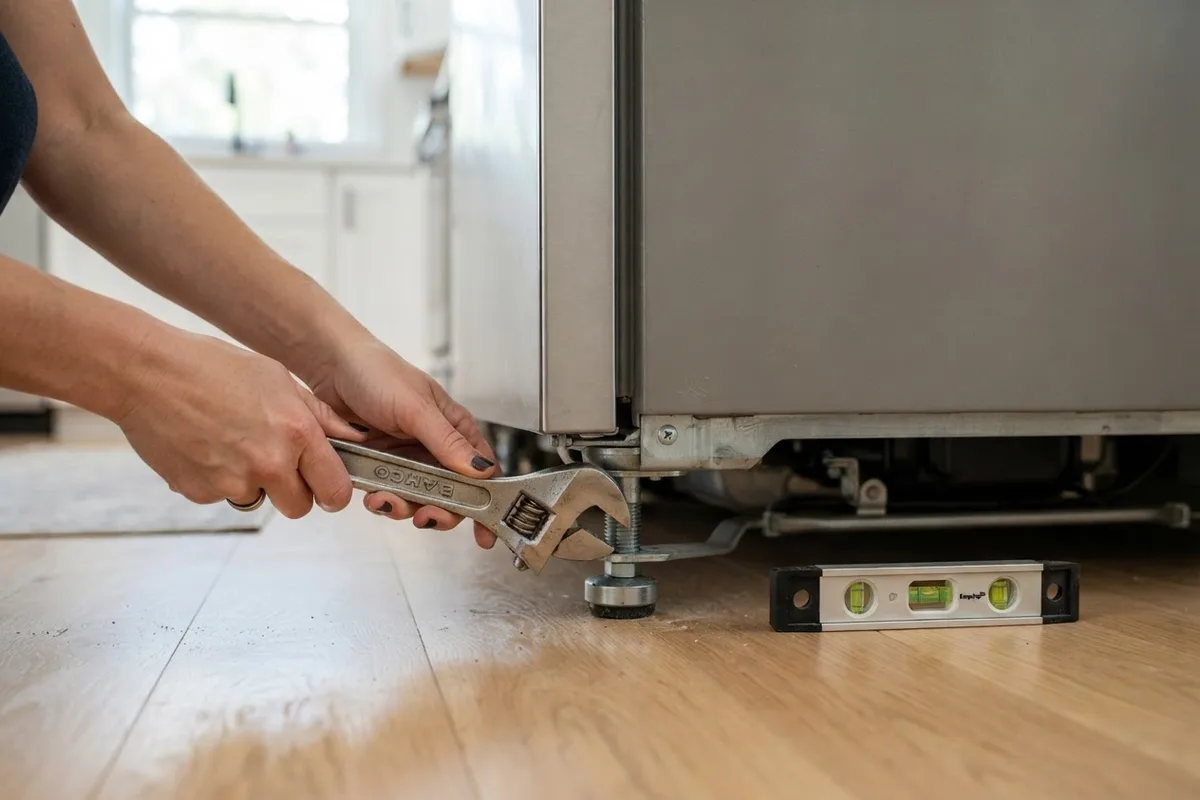
A refrigerator that sits unevenly on kitchen tile or hardwood floors twists its outer metal frame slightly and leaves one front roller barely grazing the floor. Whenever the compressor kicks on, the internal fans spin up, or someone walks past, the cabinet rocks on its diagonal corners and produces a deep, hollow knocking thud.
- Place a carpenter's level across the top of the refrigerator from side to side and then from front to back.
- Snap off the bottom front kickplate to expose the two front leveling legs or roller adjustment bolts.
- Turn the leveling bolts clockwise or counterclockwise using an adjustable wrench or flathead screwdriver until both front feet press solidly against the floor.
- Set the front of the refrigerator about a quarter-inch higher than the back so the doors swing shut gently on their own and the cabinet weight stays anchored.
- Rock the top corners of the fridge by hand to confirm there is zero play before snapping the kickplate back on.
6. Understand Normal Defrost Popping and Knocking
Not every knocking noise requires a wrench. Modern frost-free refrigerators run an automatic defrost heater two to four times a day to melt frost off the hidden aluminum evaporator coil. As the sub-zero metal tubing warms up rapidly and then cools back down, the plastic liner and metal ductwork expand and contract—producing sharp knocking, popping, or cracking noises that last for 15 to 20 minutes.
- Pay attention to when the knocking happens: if it occurs while the compressor and fans are completely silent, the fridge is in its normal defrost cycle.
- Listen for a quiet sizzling or dripping sound right after the knock, which is simply melted frost hitting the warm drain trough.
- Avoid packing heavy frozen boxes tightly against the rear plastic freezer wall, as extra pressure amplifies thermal expansion knocks.
- Check that interior glass shelves and crisper drawers are seated fully in their tracks so thermal flexing doesn't make them pop out of place.
Quick-Reference Guide: Decoding Fridge Knocking Sounds
| What the Knock Sounds Like | When It Happens | Most Likely Cause | Typical Cost Range* |
|---|---|---|---|
| Rapid, rhythmic tapping inside | Only when freezer fan runs; stops when door opens | Ice buildup hitting evaporator fan blade | $0 (DIY thaw) – $200 |
| Steady thumping at bottom rear | Whenever the compressor is running | Debris caught in condenser fan blade | $0 (DIY) – $250 |
| Single loud bang behind fridge | Right when water dispenser or ice maker stops | Loose water line slapping wall (water hammer) | $0 – $20 (foam/clamps) |
| Heavy clunk or metal knock | Once when cooling starts and once when it stops | Loose drain pan or worn compressor mounts | $0 – $180 |
| Loud internal metallic knocking | Compressor is hot; fridge is losing cooling | Internal compressor piston/spring failure | $450 – $950+ |
Typical US cost ranges; actual prices vary by local area, appliance brand, and model.
When to Call a Pro
If you have thawed the evaporator fan, cleared the lower condenser fan, cushioned the water line, and leveled the feet, yet a loud metallic knocking persists directly inside the black compressor dome—especially accompanied by rising food temperatures—stop troubleshooting. An internal knock inside the compressor shell means an internal suspension spring or piston has broken inside the sealed system. Similarly, if the evaporator or condenser fan motor bearings are grinding and knocking even when clear of ice and debris, the motor assembly needs replacement.
Before deciding between a major component swap and a brand-new unit, check our appliance repair cost guide to see which option makes financial sense for the age of your fridge. When you need experienced diagnostics, True Appliance Repair can match you with an independent local technician for dependable refrigerator repair.
FAQ
Why does my refrigerator knock once and then stop cooling?
A single loud click or knock followed by silence every few minutes usually points to an overloaded compressor or a failing start relay on the side of the compressor. Unplug the unit immediately to prevent motor damage and have an appliance technician test the start relay and compressor windings.
Can an ice maker make a knocking noise even without water hooked up?
Yes. If the ice maker toggle switch is accidentally left in the "On" position without a connected water supply, the motorized ejector arm and water inlet valve will still cycle periodically, producing a repetitive knocking and buzzing noise every few hours until you flip the arm or switch off.
Is it safe to leave my refrigerator running if it is knocking?
If the refrigerator is holding a steady 37°F in the fresh food section and 0°F in the freezer, a minor vibration or thermal pop is not an immediate safety hazard. However, if a fan blade is actively striking ice or debris, unplug and clear it promptly so the fan motor doesn't stall and overheat.