
A sudden buzzing, rattling, or grinding sound from your kitchen can ruin a peaceful morning. While modern refrigerators run with a gentle background hum, unusual or loud noises usually signal that a component is working under strain or obstructed by buildup. Diagnosing the specific type of noise and where it originates helps you resolve the issue before it leads to food spoilage or major appliance breakdown.
Before performing any hands-on troubleshooting or removing panel covers, always safety-first: unplug the refrigerator from the electrical outlet or shut off the circuit breaker at your main panel. If your fridge has a water line for an ice maker or dispenser, turn off the water supply valve as well.
| Noise Type | Likely Cause | Recommended Action |
|---|---|---|
| Vibrating or Rattling | Unlevel cabinet or loose drain pan | Adjust leveling legs; secure lower drip pan |
| Loud Humming or Buzzing | Dust-clogged condenser coils | Vacuum coils behind or under the fridge |
| Squealing or Chirping | Evaporator fan motor failing | Inspect fan blades in freezer; clear frost |
| Scraping or Clicking | Condenser fan blocked by debris | Clean rear fan area behind lower access panel |
| Rhythmic Squeaking | Frost buildup hitting fan blades | Perform a complete manual defrost |
| Loud Clicking Every 3-5 Min | Overload relay or compressor issue | Turn off power; call a professional technician |
Clean Dirty Condenser Coils to Stop Loud Humming
When condenser coils become caked in dust, pet hair, and kitchen grease, the unit cannot release heat efficiently. This forces the compressor and cooling system to run twice as hard and twice as long, creating a deep, heavy humming or buzzing sound throughout your kitchen.
To clean your coils, start by locating them. On most modern units, the coils sit behind the bottom front toe kick plate or along the bottom rear of the appliance. Older models may have visible black wire coils exposed across the back exterior.
- Unplug the refrigerator from the wall outlet.
- Remove the toe kick grille by gently snapping it outward or removing two small screws.
- Attach a long, narrow crevice attachment or coil brush to your vacuum cleaner.
- Gently brush and vacuum away accumulated debris between the coil loops, taking care not to puncture any tubing.
- Vacuum the surrounding floor area and reattach the grille panel.
- Restore power and monitor the sound over the next few hours.
Cleaning these coils every six months improves cooling efficiency and significantly reduces operating noise. If you suspect broader efficiency issues across your home, take a look at our guide on 7 seasonal appliance maintenance steps to prevent repairs.
Level the Refrigerator Feet to Fix Rattling Sounds
A refrigerator that is not sitting completely plumb will vibrate against flooring or surrounding cabinetry. Over time, the internal compressor movement creates a rhythmic rattling or buzzing noise that echoes off hardwood or tile floors.
- Disconnect power to ensure safety while working near the base of the machine.
- Place a bubble level across the top front edge of the refrigerator cabinet, then along the side edge.
- Locate the front leveling legs behind the bottom grille. Some models use adjustable rollers that turn with a flathead screwdriver or socket wrench.
- Rotate the leveling legs clockwise to raise a corner or counterclockwise to lower it until the bubble centers from side to side.
- Adjust the legs so the front sits roughly 1/4 inch higher than the back. This subtle tilt ensures the doors self-close smoothly and prevents internal drain line backups.
- Plug the unit back in and press firmly against the cabinet corners to verify that all feet rest flat against the floor.
Inspect and Clear the Evaporator Fan Motor
If you hear a high-pitched squeaking, chirping, or grinding noise that gets louder when you open the freezer door, the evaporator fan motor is the primary suspect. This fan circulates cold air from the freezer coils into the fresh food compartment.
- Safety first: unplug the refrigerator before opening internal housing covers.
- Remove freezer contents, glass shelving, and plastic storage drawers to access the rear interior wall.
- Unbolt the rear panel cover inside the freezer using a nut driver or screwdriver.
- Inspect the fan blade assembly. Check if ice accumulation is hitting the fan blades or if the fan shaft moves loosely in its bracket.
- Spin the fan blade by hand. If it feels stiff, grinds, or wobbles excessively, the motor bearings have worn out and require replacement.
- Clear away light frost buildup using a hairdryer on warm (not high heat) to avoid melting delicate plastic liners.
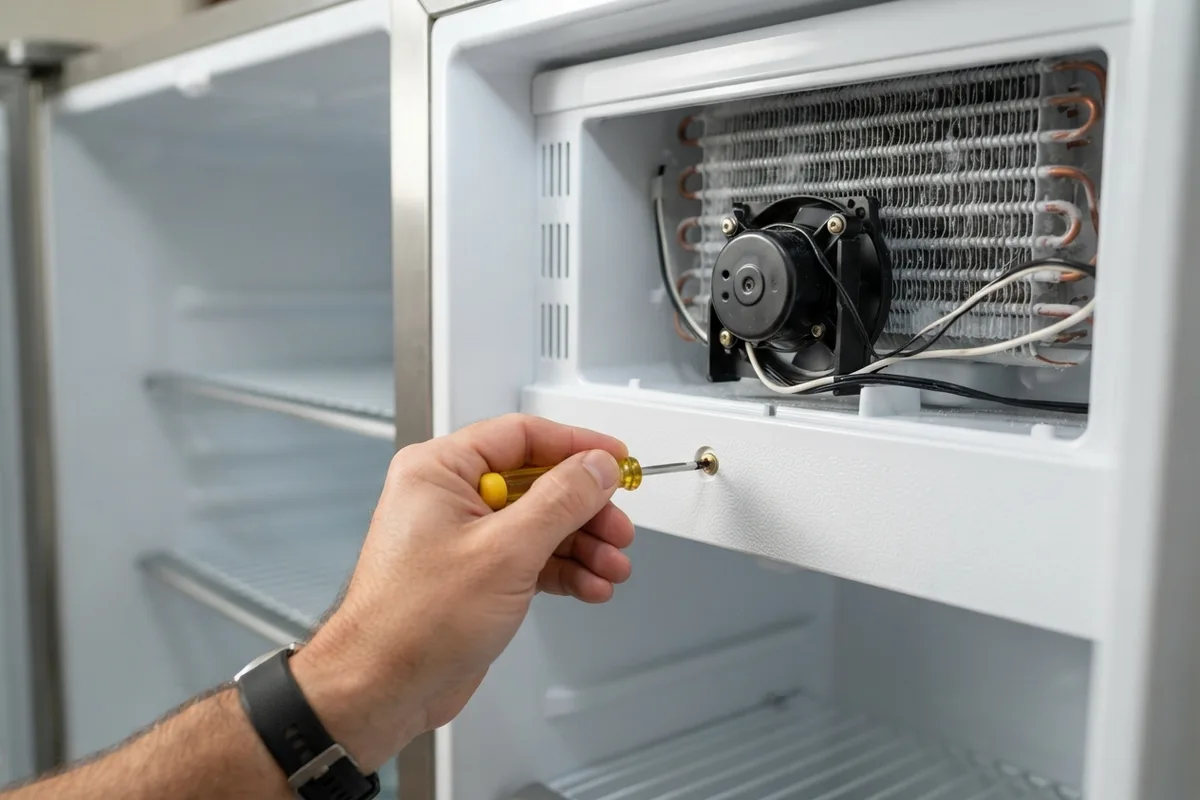 If you notice persistent frosting around this fan assembly even after clearing it, review our troubleshooting guide on why is my refrigerator frosting up to stop ice from returning.
Check the Condenser Fan Blade for Trapped Debris
For models with condenser coils located underneath the unit, a small condenser fan runs alongside the compressor to cool the coils. When paper scraps, dust bunnies, or stray household items get sucked into the rear compartment, they hit the spinning fan blades, creating a fast scraping or clicking sound.
- Pull the refrigerator away from the wall to access the back.
- Unplug the power cord and shut off the water valve supplying the ice maker.
- Remove the lower rear access panel (usually held by small hex-head screws).
- Locate the fan blade positioned next to the compressor tank.
- Carefully clear away accumulated dust, pet hair, or stray trash wrapped around the fan axle.
- Gently spin the fan by hand to ensure the blades turn freely without hitting copper tubing or wiring harnesses.
- Reinstall the back cover securely before restoring power.
Defrost Excessive Frost Build-Up Near the Fan
A failing defrost heater, faulty bi-metal thermostat, or worn door gasket allows warm, humid air to enter the unit. Frost builds up along the evaporator coils until it reaches the fan housing. As the fan spins, the blades hit rigid ice, producing an annoying ticking or flapping noise.
- Unplug the unit from the wall outlet.
- Transfer perishable food into coolers packed with ice packs.
- Open both refrigerator and freezer doors, placing towels at the base to catch melting water.
- Allow the unit to manually defrost completely for at least 8 to 12 hours.
- Wipe away all moisture inside the freezer compartment before turning the appliance back on.
If the clicking or scraping returns within a week or two, your defrost system components are not cycling automatically. If your appliance is getting older and experiencing multiple issues simultaneously, consult our analysis on 7 signs your refrigerator is dying to weigh long-term options.
Reposition Loose Drain Pan or Internal Shelves
Sometimes the noise isn't coming from a mechanical failure at all, but rather from loose items vibrating against each other inside or beneath the cabinet. The drain pan sits underneath the appliance on top of rubber mounts or frame rails to catch defrost water condensation.
- Disconnect the power plug.
- Remove the lower front grille or access panel beneath the rear.
- Locate the plastic drain pan situated near the compressor.
- Check if the pan has slipped off its mounting clips or if the dampening pads have deteriorated.
- Push the pan back securely into its brackets, or place a piece of foam dampening tape beneath it if it vibrates against metal rails.
- Re-organize glass jars, door bins, and wire racks inside the fridge. Ensure plastic containers are not touching the interior back walls where vibration transfers easily.
When to Call a Pro
While cleaning coils and leveling feet are straightforward DIY tasks, certain refrigerator noises point to internal mechanical failures that require specialized tools and expert training.
If your refrigerator makes a loud metallic clunking sound when shutting off, or if you hear a clicking sound every few minutes followed by complete silence and no cooling, the start relay or compressor motor itself may be failing. Never attempt to service sealed refrigerant lines or high-voltage electrical panels yourself. Doing so poses severe electrical and chemical hazards.
Typical professional repair costs for fan motor replacements or electrical relay fixes generally range from $150 to $400 depending on your area, brand, and model. If diagnosing complex sealed system issues becomes overwhelming, True Appliance Repair can match you with a local appliance pro to evaluate your unit quickly.
To understand where your fridge stands in its overall lifespan, check our detailed guide on how long do appliances last.
FAQ
Is it normal for a refrigerator to make a buzzing sound?
Yes, a gentle low-volume buzzing sound is normal during operation. It usually comes from the compressor running or the ice maker water valve opening to fill the ice tray. However, if the buzzing becomes uncharacteristically loud or persistent, it typically indicates dirty condenser coils or a loose component vibrating against the frame.
Why is my refrigerator making a loud clicking noise every few minutes?
A loud click occurring every few minutes usually means the compressor start relay is attempting to start the compressor motor but tripping on overload protection. This can stem from a failed start relay capacitor, abnormal home voltage, or a failing compressor pump.
What sound does a dying refrigerator compressor make?
A failing compressor often produces a harsh metallic knocking, loud rattling upon shutdown, or a high-pitched grinding sound. In many cases, it will simply click loudly every 3 to 5 minutes without the motor kicking on to cool the cabinet.
Why does the noise stop when I open the refrigerator door?
When you open the door, the door switch automatically cuts power to the internal evaporator fan motor to prevent blowing cold air out into the room. If the noise stops instantly as soon as you open the door, the noise originates directly from the evaporator fan or ice buildup around its housing.